
Are Drywall Cracks Normal? When to Worry
Most drywall cracks are normal. The frame dries, shrinks, and settles, and a patch and a coat of paint take care of it. A smaller share are carrying news from the soil under the house. Here is how to read a crack by where it sits, which way it runs, and whether it keeps moving, so you know which kind you have before you paint over it.
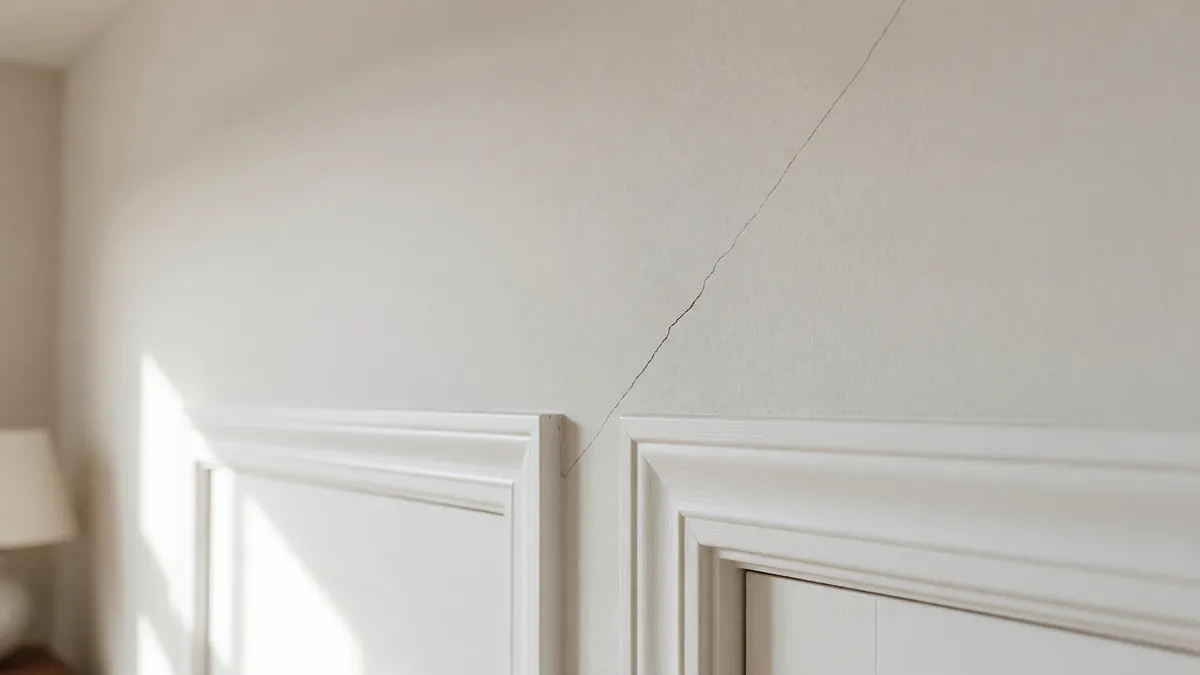
You notice it one evening as you reach for the lamp. A thin line above the bedroom door, climbing toward the ceiling. Faint. Barely wider than a pencil stroke. You're fairly sure it wasn't there last spring.
Then the questions arrive. Is the house settling? Is the foundation failing? Are you about to spend the next year paying for repairs?
The reality is calmer than any of that. So, are drywall cracks normal? Usually, yes. Almost every house collects a few, and the majority need nothing more than a patch and a coat of paint.
But here's what's also true: a smaller share of drywall cracks are carrying news from below the foundation—and getting it wrong costs you in either direction. Overreact to an ordinary seam crack and you may pay for an inspection or a repair the house never needed. Patch over a wall that is reporting soil movement and you paint out the only evidence you had, while the soil underneath keeps moving.
Telling the two apart doesn't take a specialist's eye. It takes knowing where to look, what to compare, and a few weeks of patience before you reach for the patching compound.
Yes, Most Drywall Cracks Are Normal
Most drywall cracks are exactly what they look like: minor, cosmetic, and a product of how the wall was built rather than anything happening beneath it. A drywall wall is two materials with very different habits, fastened together and asked to behave as one.
The panels are gypsum pressed between sheets of paper—stiff, flat, and unable to bend. Behind them sits a wood frame, and wood never holds perfectly still. It absorbs moisture in humid months and releases it when the heat runs, swelling and shrinking by amounts too small to see. Temperature does the same work on a smaller scale. The frame flexes a little. The panel can't.
That stress has to go somewhere, and it goes to the weakest part of the surface. Your wall isn't one sheet but several, joined at seams covered with paper tape and joint compound, and turned at inside corners the same way. Those joints carry the least material and the least reinforcement, so they're where movement in the frame shows first: a fine line tracing a seam, or a split running down the corner where two walls meet.
This is why cracks in drywall are so common. Nearly every home develops a handful over the years, often in the same few spots, and most stay thin and stop growing. A crack like that is the frame doing what wood does. It isn't a structural finding, and it doesn't call for a contractor. Once you've confirmed it has stopped moving, it calls for a patch whenever the look of it starts to bother you.
Takeaway: The question isn't whether your walls will crack—some will. It's whether a given crack settles down and stays put.
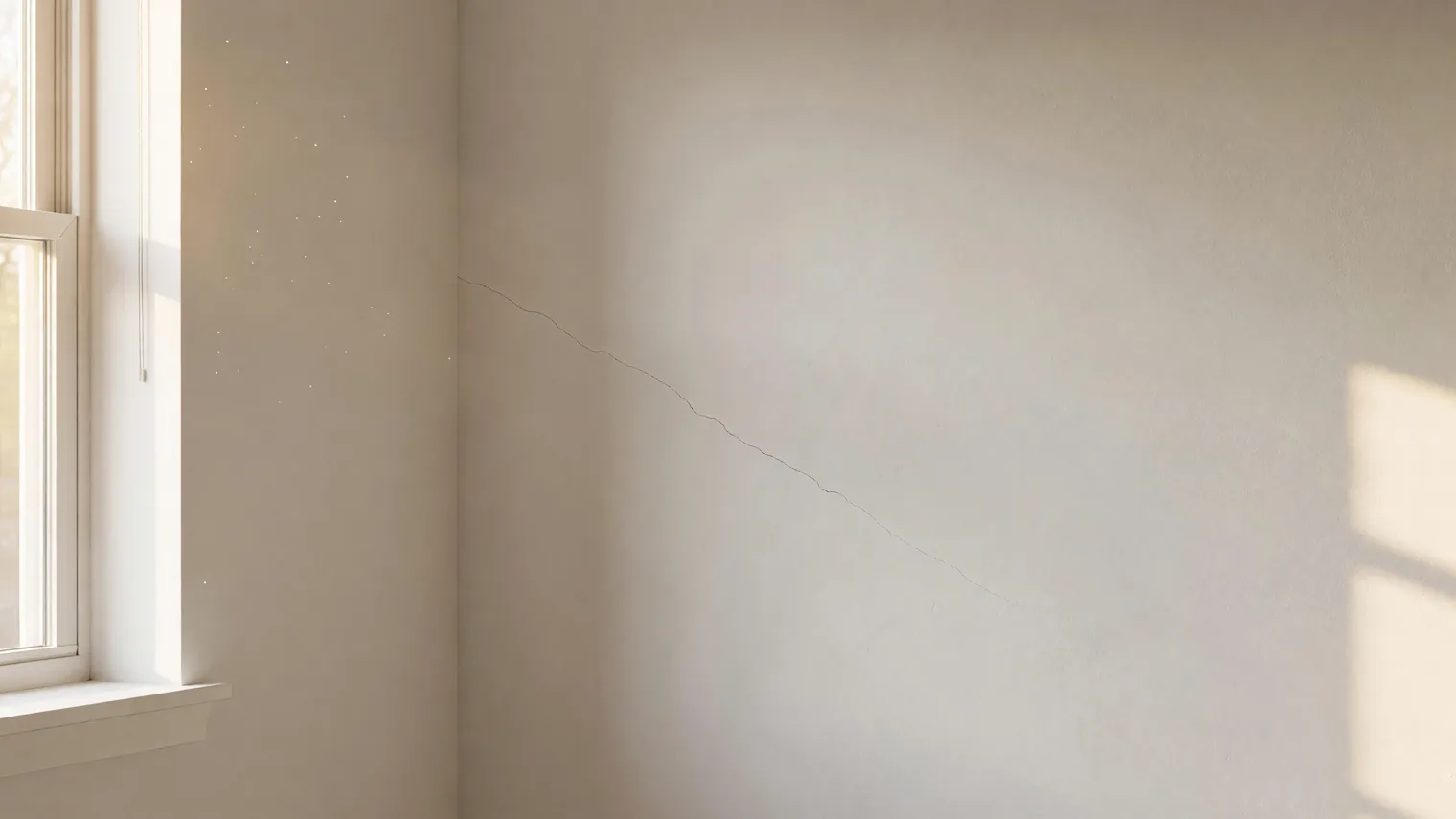
What Causes Drywall Cracks, From Harmless to Soil-Deep
Most cracks in drywall trace back to one of nine causes, sorted here from the ones inside your walls to the ones that start in the ground.
- Framing lumber drying out. Studs and joists hold moisture when installed, and as that lumber dries it shrinks and pulls on the panels fastened across it.
- Seasonal humidity swings. The frame follows the air around it, so seam cracks tend to appear when the furnace runs hardest and fade once the air turns damp.
- Truss uplift. In cold months, roof trusses can arch upward as their upper members absorb attic moisture, lifting the ceiling off interior walls at the joint where ceiling meets wall.
- Nail and screw pops. A fastener that missed the stud, or loosened as the wood dried, backs out and pushes a small round bump through the surface.
- Thin or poorly bedded tape. Tape laid over too little compound never bonds fully, so it lifts or splits along the seam at the first movement.
- Vibration and slammed doors. Repeated jolts from doors banged shut, or from construction next door, work at the corners of openings until a short crack appears.
- Uneven foundation settlement. When one part of the foundation sinks more than the rest, the frame above racks out of square and the drywall splits where it's pulled hardest.
- Soil moisture swings under the footing. Soil that swells when wet and shrinks as it dries raises and lowers the foundation in cycles, and the walls crack along with it.
- Voids or poorly compacted fill. Loose fill, or pockets where soil has washed away, compresses under the house, and the part of the foundation above it drops.
The first six are the house itself—wood, air, fasteners, and finishing work behaving the way they always have. They leave thin lines at seams and corners that open, maybe breathe with the seasons, and then quiet down. The last three trace to the soil, and those are the cracks that keep moving. Your drywall is only where they surface; the cause sits under the foundation, out of reach of any patch, and it's the same ground behind most of what causes foundation problems.
Why New Homes Crack in the First Year or Two
New homes crack early because nearly everything in them is still settling in. The framing lumber is still drying, and the soil packed around and beneath the foundation is carrying the full weight of the house for the first time. Both adjust over the first seasons, and the drywall records that adjustment at its seams and corners.
Cracks in that window are expected, not a sign the build went wrong. Many builders plan for them and come back to touch up the drywall once the house has been through its first round of heating and cooling seasons. A seam crack that shows up early, then holds its shape through the next change of weather, has done its moving. That crack is finished.
The exception is timing. After that early stretch, the lumber has come into balance with the air around it, and the ground should have taken the load. If new cracks keep arriving after that point—fresh lines in new places, or old ones opening again—the house is no longer settling in. That matters most if your lot was built up with fill. A pattern like this usually points to fill that was never properly compacted, still compressing under the foundation long after it should have stopped.

How to Read a Drywall Crack
A crack holds more information than it looks like it should, as long as you read it before you cover it. Fill and paint it first, and the evidence goes with it—along with your best chance of learning what opened it.
No single clue settles the question. A diagonal line can be harmless, and a tapered one may have stopped moving years ago. What counts is how the clues combine, which is why the honest answer to "are drywall cracks normal" comes down to four things read together: where the crack sits, which direction it runs, whether its width holds steady or tapers, and when it opened and whether it comes back.
A crack that reads as ordinary on all four is almost certainly just the house. The more of them that point the other way, the closer a look it deserves.
Where the Crack Is
Start with location. A wall cracks wherever stress on it runs highest, so where the line sits tells you where that stress is coming from.
- Along a flat seam in the middle of a wall. The crack traces a joint between two panels, clear of any door or window. That's the tape letting go at the thinnest point in the surface, and it's almost always the house at work rather than the ground below it.
- From the corner of a door or window. An opening cuts through both the panel and the framing, which makes it the weakest spot in any wall. It's also where a frame pulled out of square gives itself away first. A crack here earns a closer look, though alone it can still be slammed doors or seasonal movement.
- Where the ceiling meets the wall. Usually truss uplift, seasonal and harmless, as covered above.
- In several rooms on the same side of the house. One crack is an incident. Matching cracks room after room along one side are a pattern, and framing lumber and joint tape don't coordinate their failures across separate rooms. What those rooms do share is the foundation beneath them—and the soil holding that side of it up.
The first three usually stay local to one wall. The fourth is the one that asks you to look below the floor.
Which Way It Runs
Next, follow the line end to end and note its direction. Drywall goes up in rectangular sheets, so the joints between them run plumb and level. A crack that holds a straight vertical or horizontal course along a panel edge is usually the tape. It follows the joint because the joint gives way most easily, and it rarely means more than a patch.
Angled lines tell a different story. A crack that leaves a door or window corner on a diagonal is the framing around that opening being racked out of true, one side dragged lower than the other. The angle often carries a second clue: it tends to lean toward the part of the house that dropped. Treat that as a tendency rather than a rule—studs and fasteners can bend a crack's path—but note which way yours points.
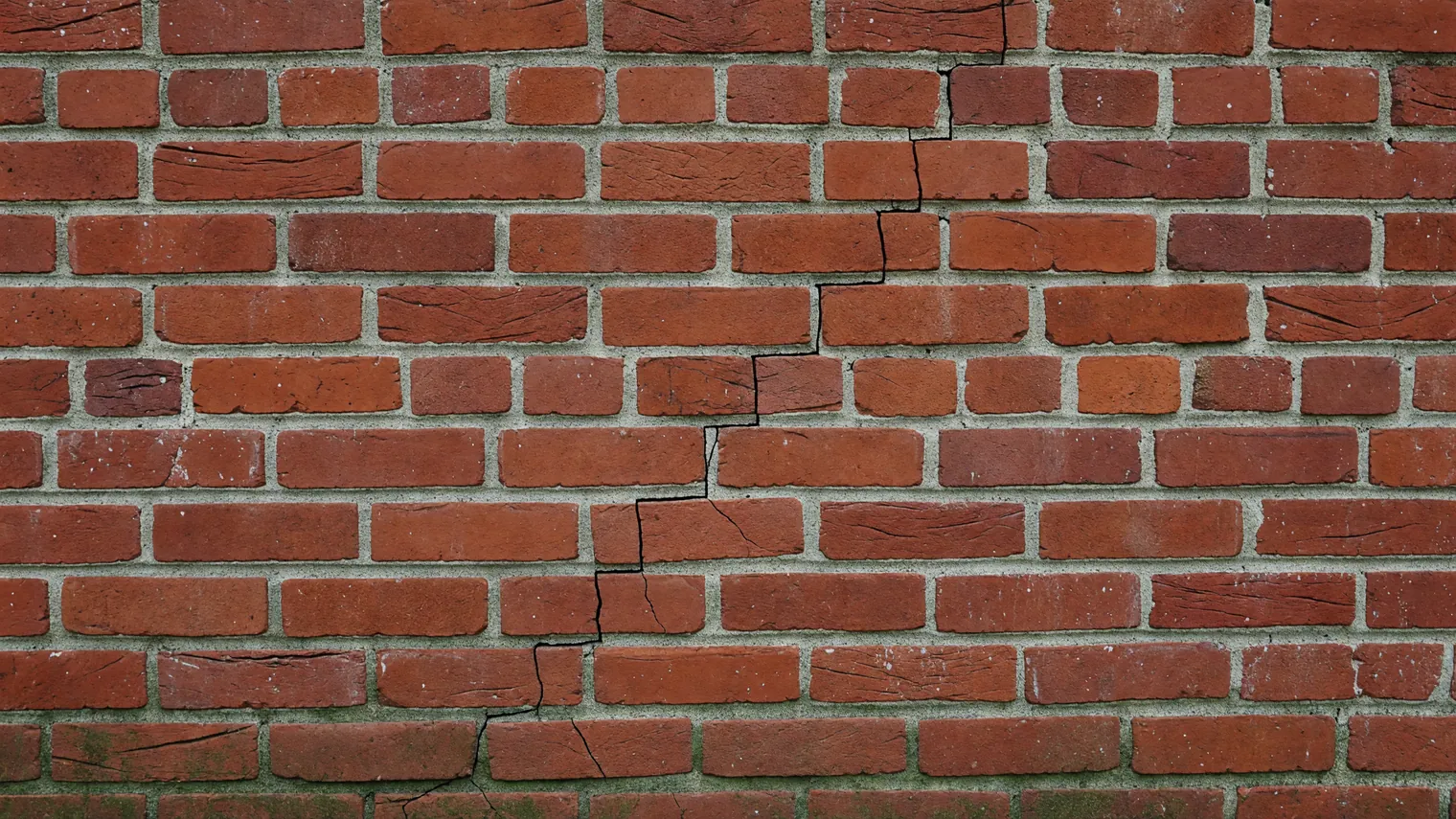
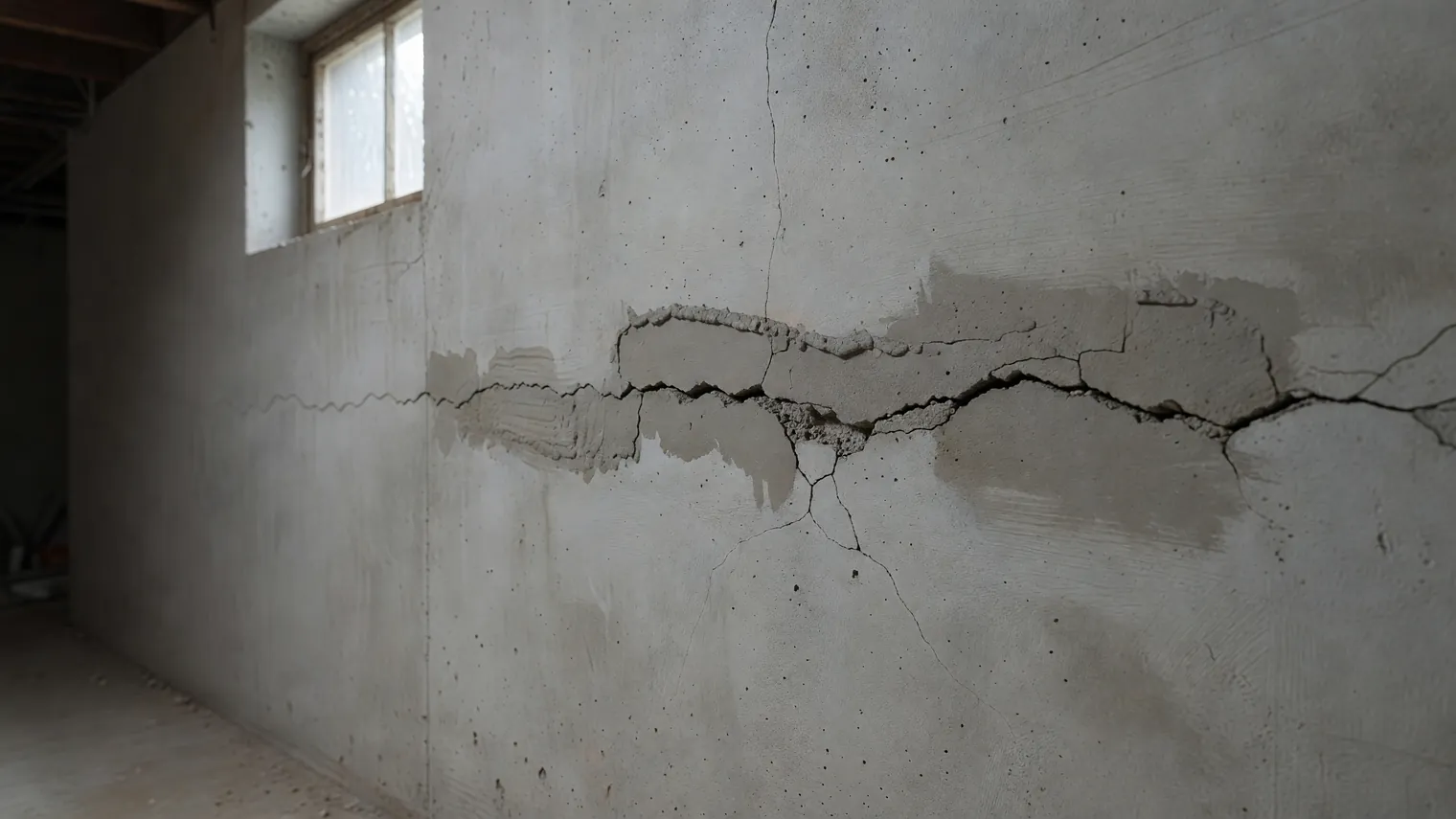
Two more shapes are worth taking seriously. Stair-step cracking is more typical of block or brick than drywall, yet a jagged zigzag across a wall reads the same way: the surface is breaking along the easiest route as the structure under it settles unevenly. A crack that climbs from the floor toward the ceiling on the low side of a room belongs in the same group. Both point below the floor—to the foundation, and past it to the soil.
Whether It's Even or Tapered
Width is the third clue, and you read it by comparing the crack against itself. Hold a flashlight flat to the wall so the beam rakes across the surface instead of shining straight in. Light at that low angle throws a shadow into even a faint line. Study one end, then the other.
A drywall crack that stays hairline-thin and even from end to end is usually the surface giving up—tape separating along a seam, or joint compound that shrank as it cured. Nothing in it suggests one part of the wall went somewhere the rest didn't.
A crack visibly wider at one end tells a different story. The wall didn't simply stretch; one section moved farther than the section beside it, so the panel turned slightly as it split. That rotation is what differential settlement looks like from inside the house: one stretch of foundation sinking more than its neighbor.
With the light still there, check whether the two edges still sit flush. If one side stands proud of the other, the wall has moved out of plane as well as apart, and tape alone rarely does that.
Even so, the width you see today counts for less than whether it changes. That comes down to timing.
When It Opened and Whether It Comes Back
This is the fourth clue, and usually the one that settles the question. Harmless movement and soil movement can leave similar lines, but they behave differently over the months that follow.
- If it opens and closes with the seasons: a seam that gapes in winter and tightens by summer, or the reverse, is the frame taking on and giving up moisture. That's the house breathing. Expect it every year, and don't expect it to get worse.
- If it only grows, or reopens after a patch: a crack that never closes, or splits again along the line you filled, is recording movement that hasn't stopped. That's the pattern soil leaves behind.
It also helps to know what else happened when the crack first showed up. An unusually wet season, a long dry spell, a rerouted downspout or new planting bed against the foundation, a plumbing leak near the footing—each changes how much water the ground beside your house holds, and soil that gains or loses moisture can gain or lose volume with it. A crack that follows one of those changes deserves a note.
Here's what most homeowners run into: they can't say when the crack appeared. Few people study their walls until a line catches their eye. That gap is what the dated monitoring routine later in this article is for—a written record in place of memory.
When to Worry About Drywall Cracks
The short answer to when to worry about drywall cracks: when one shows that the movement behind it is uneven or unfinished. And "worry" here means get it looked at, not panic. Nothing in a cracked wall suggests the house is about to come down; soil problems play out over months and seasons, which leaves you time to watch, compare, and make a sensible call.
Taken together, the four clues boil down to five warning signs:
- A diagonal line angling off the corner of a doorway or window frame
- A crack that tapers, broad at one end and fine at the other
- A crack that reappears through fresh compound and paint
- A gap that measures a little wider at each check
- Similar cracks clustered on one side of the house, across more than one room
Each says the same thing in its own way: part of the structure moved and the rest didn't, or the moving hasn't stopped.
What matters is how they stack up. One crack showing one sign is worth watching; plenty of walls carry a single diagonal or a slight taper and never change again. Several signs on one crack, or the same sign in several rooms, is worth an assessment. That isn't an emergency. It's a pattern worth tracing to its source before you paint over it.
The Signs That Travel With Soil Movement
A drywall crack is one reading from one wall. The same day you find it, walk the rest of the house and look for company. Soil movement rarely keeps to a single room.
- Doors and windows. Any that stick, rub the jamb, or won't latch without a lift or a shove.
- Gaps above closed doors. A gap along the top that runs wider at one end than the other: the opening has racked out of square.
- Trim and baseboards. Casing pulling off the wall, or baseboards lifting from the floor.
- Floors. A marble that rolls on its own, or a spot that feels downhill underfoot. Sloping floors have their own causes, covered in sagging floors: causes and solutions.
- Exterior brick. Stair-step cracks climbing the mortar joints, often near corners and openings.
- Foundation walls and slab. Cracks in basement or crawlspace walls, read the way you'd read hairline cracks in a foundation, and lines across the floor slab, where small cracks in a basement floor follow rules of their own.
One crack by itself rarely means much. Walls crack, and plenty of doors stick through a humid summer. But a crack plus several items from this list, particularly on the side of the house where the crack sits, stops looking like coincidence. Brick, trim, door frames, and drywall have no reason to give way together unless the ground they all rest on moved. That's a pattern, and a pattern points below the foundation.
Don't Patch It Yet: How to Watch a Drywall Crack
A filled crack can still report back, but it only knows one sentence: it came back. It can't tell you how far the line traveled, how fast, or which end pulled open wider, and those are the details that separate a tired seam from a settling foundation. Leave the crack bare for a few months and let it keep its own record. That record turns "are drywall cracks normal" from a question about houses in general into a question about this wall, and it answers the second one.
- Draw a short pencil tick across each end of the crack, and write the date beside each one.
- Photograph the crack straight on, with a coin or ruler held flat against the wall for scale. Stand in the same spot, under the same lighting, every time.
- Record the room, the wall, and anything your walk-through turned up, such as a door that rubs or a lopsided gap above one, on a single page or in one phone note.
- Check again on the same day each month. Look for the crack running past a tick, or for a gap that looks wider than it did in last month's photo.
- Keep the routine going through at least one change of season, so any seasonal opening and closing has time to show itself.
- Write down any door that starts to stick, along with the date you first noticed it.
If the ticks haven't moved and nothing else in the house has changed, you have your answer: it's a normal drywall crack. Patch it, paint it, and go about your life. The repair itself is laid out step by step in how to fix cracks in drywall. If the crack ran past a tick, grew wider from one photo to the next, or reopened where someone had patched it before, the next sections explain what that movement means and what to do about it.
Why a Moving Crack Points Below the Foundation
A crack that keeps moving involves three layers of the house, and only one is in plain view. The drywall is where you notice it. The framing behind it rests on the foundation, so when a section of foundation drops or rises, the studs and plates above follow, and the rigid panels split where they can't bend. The foundation has usually held up fine; concrete will carry a house for generations, provided the ground under it stays put.
That ground is what gave way. Sometimes it's settlement: soil compressing under its load until one stretch of footing sits lower than its neighbor. Sometimes it's moisture, with soil swelling as it takes on water and contracting as it dries, raising and lowering the foundation season by season. Moving water can also carry soil off and leave voids beneath the footing, and fill that was never compacted keeps consolidating for years. Your drywall is where the movement shows. The soil under your footing is where it started.
Here's the catch with every fix aimed at the wall: none of them reaches that soil. Fresh tape, flexible caulk, and elastic patching compounds are built to hide a crack or stretch across it, and some ride out a little movement for a while. The cause hasn't gone anywhere, so the crack comes back, often right through the repair. Patch it three times and you have three records of one unsolved problem.
To be fair, the same limit applies below the floor. Lifting a settled foundation back toward level without strengthening the soil beneath it restores the view, not the support—the weak ground is still there, carrying a load it already failed to carry once. A lasting repair has to reach the layer that moved.
What a Soil Assessment Finds, and What Fixes It
Every soil stabilization project we take on starts with a measurement, not a guess. The crack in your wall can tell you that the ground moved. It has no way to show how deep the weak soil runs or where it begins and ends, and the repair depends on both. From there, the work follows a fixed order:
- Test the soil. We measure soil density with dynamic cone penetrometer (DCP) testing, which finds the weak zones beneath the foundation and shows how far down they reach.
- Plan the injection. A custom injection plan targets the depths and locations the testing found, so treatment goes where the soil is weak.
- Place the probes. We drive small injection probes to predetermined depths beneath the foundation.
- Inject the polymer. High-density expanding structural polymer goes into the weak subgrade. It fills voids, compacts loose soil, and increases the soil's load-bearing capacity.
- Lift and monitor. As the polymer expands, it lifts the foundation back toward level, with lift levels monitored in real time. Stabilizing and lifting happen in one step.
- Inspect and close up. A final inspection checks the result, and the probe holes are patched.
The polymer won't shrink, degrade, or wash away; it becomes a permanent part of the soil mass. Most residential projects are completed in a single day.
For example: A 1950s brick home in Denver had started to settle. DCP testing found weak, poorly compacted soil extending about 10 feet below grade—ground that could no longer support the brick foundation. The injection plan went after those weak layers directly: injection points 4 feet on-center along the affected area, each one injected at two depths to cover the full column of weak soil. We stabilized the foundation in four hours, with no excavation and daily life in the home uninterrupted. The Denver settling home case study lays out the test results and the plan. The testing set the depth, and the depth set the plan.
Injection isn't the only sound repair. Steel and helical piers work by transferring the load to deeper, stable ground, and a properly installed pier system does hold a foundation up. The differences are cost, disruption, and what stays behind. Deep soil injection runs 40–70% less than traditional pier systems, piers require excavation around the foundation, and the weak soil remains in place beneath the house, bypassed rather than strengthened.
At the far end sits a foundation that has failed structurally—the concrete itself, not only the ground beneath it. For that, foundation replacement is a real last resort. Few cracked walls lead there, but when one does, no amount of soil work substitutes for new concrete.
Keeping Normal Drywall Cracks Normal
Prevention comes in two halves, one for each kind of crack. Seam cracks start with the frame swelling and drying as indoor air changes, so the aim is to narrow that swing. Keep indoor humidity steady through the year: run a humidifier through the dry heating months, and ventilate or dehumidify when the air turns damp. Studs that hold a more even moisture content all year move less, and the taped joints have less reason to split.
The soil half is about water, and nearly all of it happens outside:
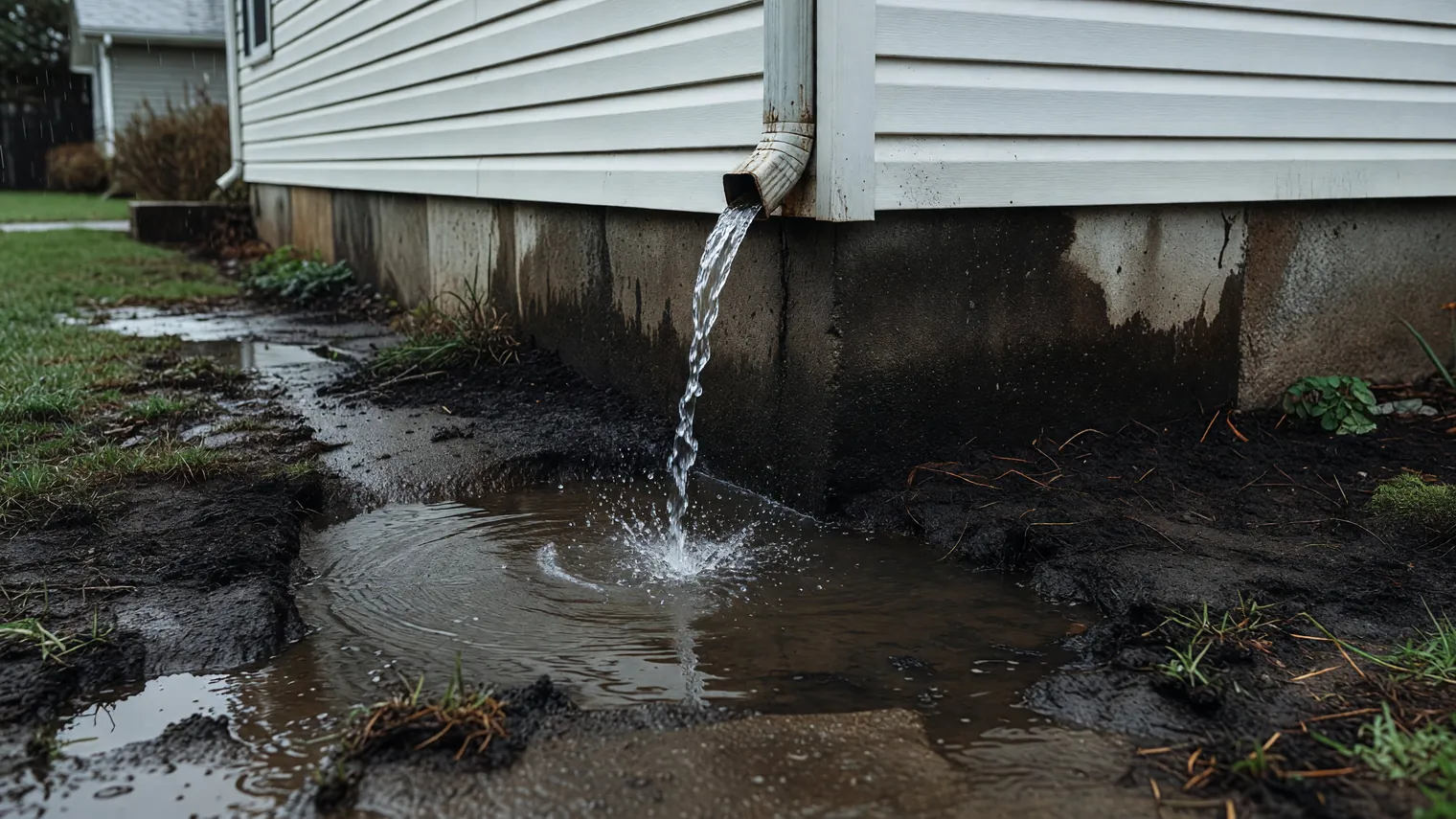
- Gutters kept clear, so rain reaches the downspouts instead of spilling over the edge.
- Downspouts extended, so they discharge well away from the house rather than at its base.
- Grading sloped away from the foundation, so surface water runs off instead of collecting against it.
- Planting beds and irrigation set back, so watering doesn't soak the ground right against the footing.
- Plumbing leaks fixed promptly, before a slow drip saturates the soil beneath the slab or crawlspace.
Know what this buys you. Drainage protects soil that is still stable; it does not repair soil that has already lost strength. Steady moisture keeps sound ground sound, but it can't densify loose fill or close a void that running water has already carved. If your monitoring showed movement, drainage is a companion to the repair, not a substitute for it. Stabilize the soil first, then manage the water so the ground stays where the repair left it.

Most Drywall Cracks Are Normal; the Ones That Keep Moving Aren't
Which brings you back to the question you started with: are drywall cracks normal? Most are. A thin, even line along a seam or an inside corner, one that holds still through a full change of season and has no company anywhere else in the house, is the frame and the tape behaving as they always have. That crack needs a patch and fresh paint. Nothing more.
The other branch is narrower, and your notes make it easier to recognize. A crack that tapers, reopens through a repair, or spreads from one check to the next—especially alongside a sticking door or a sloping floor in that part of the house—is the soil talking. Patching that crack only postpones the question. The line comes back because the ground that opened it is still on the move.
If your pencil ticks and dated photos lead you to the soil, see how our process works, then request a free on-site assessment from Stratalock's geotechnical experts. The assessment measures what is actually under your house and tells you plainly what it finds, including when the answer is that nothing needs fixing. Either way, you decide from evidence rather than a guess.
Get a free assessment and cost comparison for your foundation project. Discover exactly how much you can save with deep soil injection technology.