
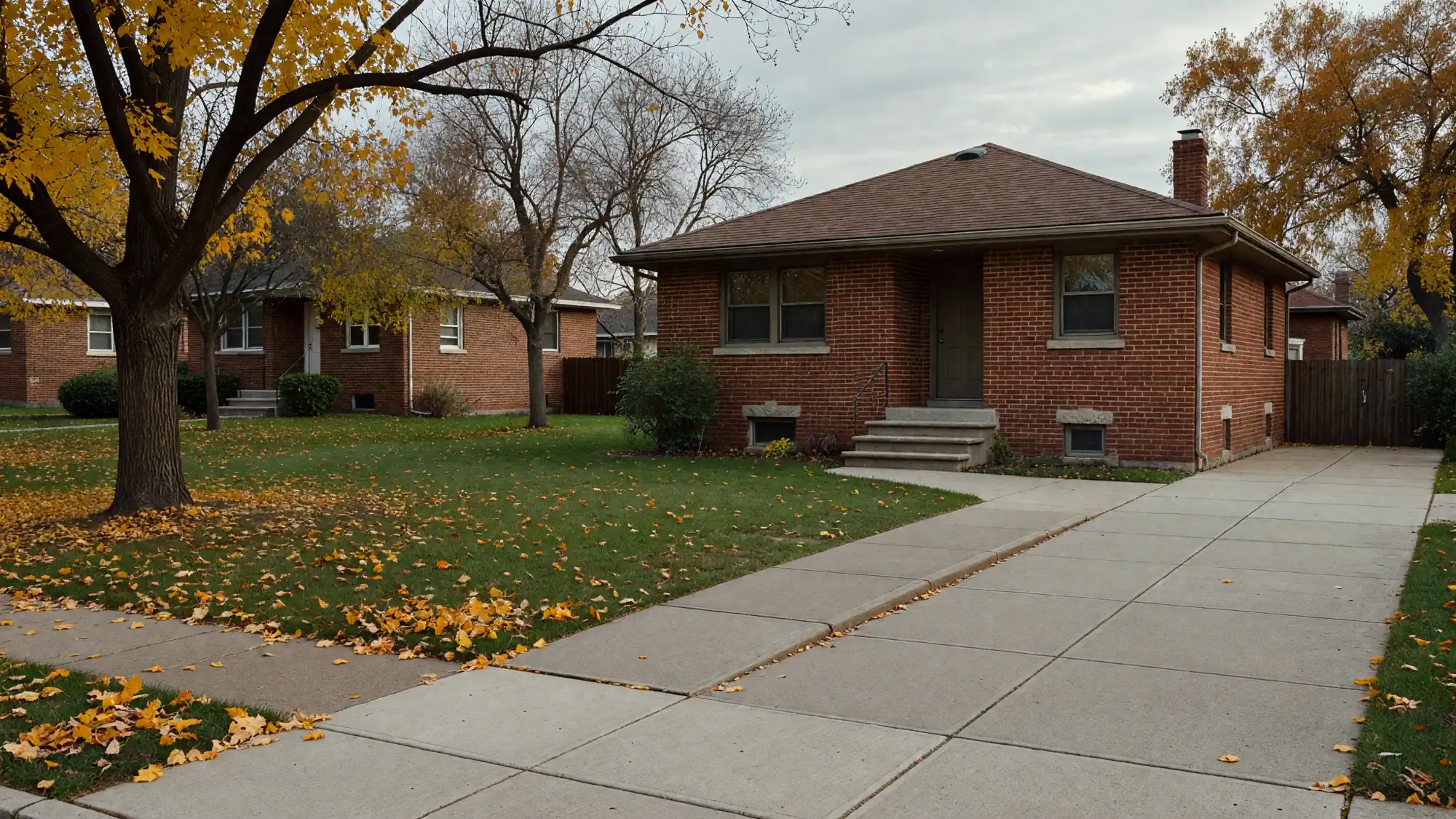
Concrete leveling, Chicago: Sunken driveways, patios and walks, lifted back to level
With polymer concrete leveling, Chicago driveways, front walks and patios that have sunk or tipped come back to level in a few hours, without being torn out. We work through pencil-sized holes and firm up the loose soil underneath, so the slab has solid ground to sit on.
Or call (855) 850-5625
Serving the greater Chicago area, from Lincoln Park to Skokie, Schaumburg and Grayslake.
- Holes, about the size of a pencil
- 3/8"
- Until it’s usable (90% strength)
- 15 min
- Less than a new slab costs
- 50%+
Case study · Chicago, IL
A Sinking Chicago Patio, Back to Level in Under Four Hours
Before we explain how any of it works, here is one slab like yours. Same city, same problem, fixed the same day without breaking up any concrete.

Drop at the back door
Patio 3″ below the door sill Level with the door sill
- Settlement corrected
- 3″
- Start to finish
- < 4 hrs
- Drainage, the root cause
- Fixed
01The problem
The rear patio had sunk three inches and pulled away from the house, leaving a lip to catch your foot right at the back door.
02Why it sank
Weak soil underneath, made weaker by rainwater that pooled against the patio after every storm.
03The fix
We injected polymer through pencil-sized holes. It lifted the slab back to level and compacted the soft soil beneath it, and new downspouts now carry the roof water away from the patio.
Same lip at your door? Get a free estimate
Won't it just sink again?
Why Concrete Sinks in Chicago, and Why New Concrete Sinks Too
Concrete rarely fails on its own. A slab drops because the ground under it gives way. That is the first thing to know about concrete leveling: Chicago soil, not the concrete, is usually what moved.
- Your slab The part you can see, and usually the part that did nothing wrong
- Fill under the slab Loose soil, often never compacted
- Soft glacial clayThe soft layer Historically called Chicago Blue Clay
- Dense, hard-packed till Left by the glaciers
- Limestone bedrock About 100 feet below the street
Three ways the ground under a slab gives way
-
The clay compresses
Soft clay squeezes down under the weight it carries. Year after year, a driveway or stoop settles with it.
-
Water washes the soil out
A downspout that empties at the edge of the slab, or rain that pools against it, softens the ground and carries it away. The slab is left sitting over a hollow.
-
The fill was never compacted
Soil pushed back in after the house or slab went in is often loose. It keeps settling long after the concrete is poured.
Tear it out and pour new
New concrete, same soil.
The soft clay, the washed-out pocket and the loose fill are all still there, waiting under a fresh slab.
Lift it with polymer
Same concrete, firmer ground.
The polymer fills the hollows and compacts the loose soil as it lifts the slab, and it will not wash away.
One honest caveat. If a downspout still pours onto the slab, that water keeps working on the soil. Then fixing the drainage is part of the job, the way new downspouts were on the Chicago patio above.
Not sure why yours sank? Get a free estimate
Seven steps, usually a few hours
How Polymer Concrete Leveling Works
Nothing is torn out and nothing new is poured. Through a few pencil-sized holes, one material does both jobs: it fills the hollow and firms up the soil under your slab, and it lifts the concrete back to level.
-
We measure the drop and find the cause
We look at the slab and the ground around it, measure how far it has settled and why, and plan where each injection goes.
-
We protect the yard around it
Lawn, plantings and the walks next to it are covered before work starts. Nothing gets dug up.
-
We drill a few 3/8-inch holes
Small holes, about the width of a pencil, go through the concrete exactly where the plan puts them.
-
Polymer fills the hollow and firms the soil
High-density expanding polymer goes in under the slab. It spreads into the hollows and presses the loose soil tight before it starts to push up.
-
You watch it rise, and it stops at level
We read the slab against a level line the whole time and adjust each injection as it goes, so it comes up evenly and stops at level, not past it.
-
We seal the holes and check the lift
The pencil-sized holes are filled and sealed, and we inspect the finished slab before we call it done.
-
You walk on it within minutes
We clean up, and the slab is ready to use almost right away: the polymer reaches 90% of its full strength within 15 minutes.
One step, two fixes. The same injection that lifts the slab fills the hollow it sank into and firms the soil around it, so it has something solid to sit on.
- Injection holes, about the width of a pencil
- 3/8″
- For the polymer to reach 90% of full strength
- 15 min
- Most home projects, start to finish
- A few hours
Want to know if yours can be lifted? Get a free estimate
Find your slab
Driveways, Sidewalks, Patios, Stoops and Garage Floors
These are the slabs we lift around a house, and each one shows trouble in its own way: a puddle, a lip, a gap at the door. Find yours below.
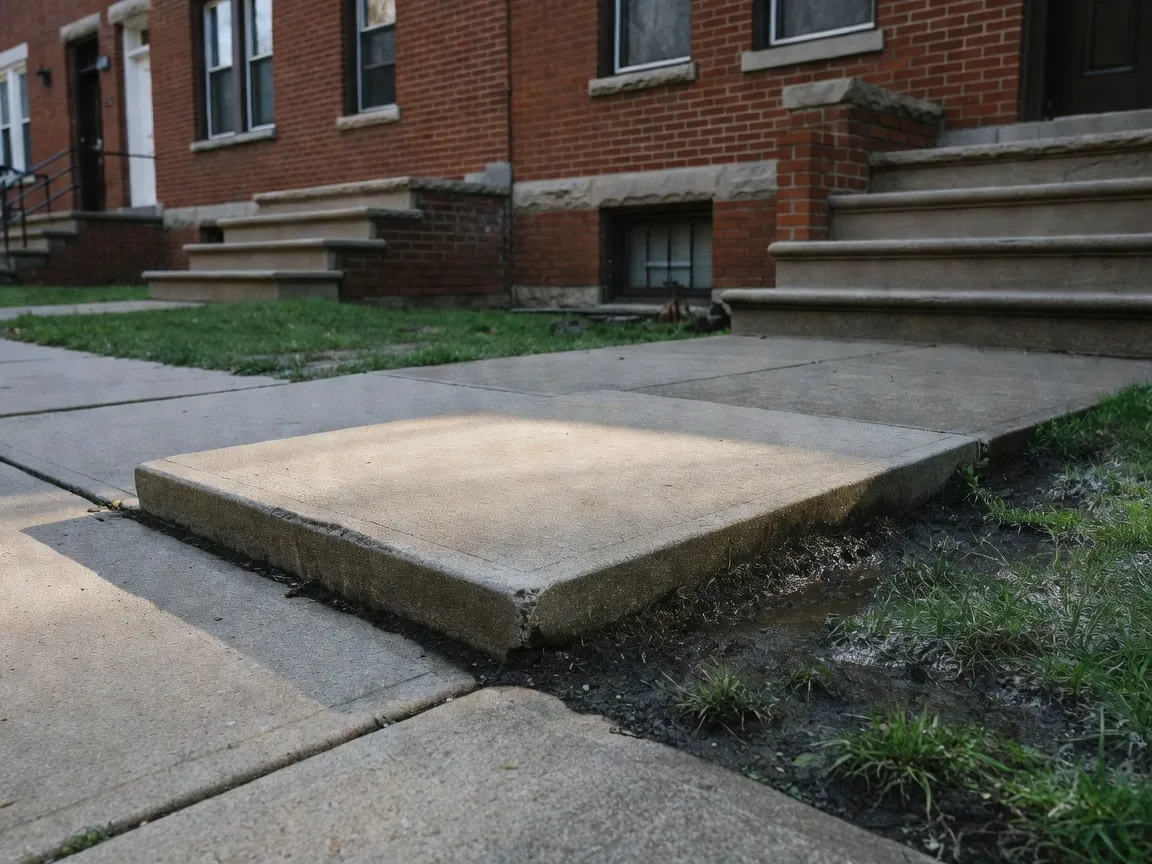
-
Driveways
Water sits in the low spot or runs toward the house, and a bump grows where the driveway meets the garage.
LiftedThe slab comes back to one even plane, so rain runs off and the car rolls in without the jolt.
-
Sidewalks and walkways
One square drops or tips and leaves a raised edge, just high enough to catch a toe.
LiftedLifted flush with the squares beside it, the lip is gone.
-
Patios and pool decks
Slabs settle unevenly, edges stand proud, and rain runs back toward the house instead of away.
LiftedLifted back to level, the surface is even underfoot and water drains off it again.
-
Front stoops
The stoop sinks and pulls away from the door, leaving a gap at the threshold and a taller first step.
LiftedRaised back up to the door, the gap closes and the step is the height it should be.
-
Garage floors
The floor settles and cracks, and the door stops meeting the slab or starts to stick.
LiftedWe lift the slab and firm up the soil beneath it, so the floor is even under the door and stops dropping.
Each of these is a job for concrete lifting. Chicago soil is often soft glacial clay, and the polymer firms it up under any of them. More on each in our guide to residential concrete lifting.
See yours on the list? Get a free estimate
Mudjacking, polymer or new concrete
Mudjacking or Polymer? And When to Replace Instead
If you’ve been reading up on mudjacking, Chicago or anywhere else, here is the straight answer: it does lift a slab. The difference is what it leaves under your concrete. Mudjacking pumps cement slurry through holes 1 to 2 inches across. We inject polymer through 3/8-inch holes, and it cures in minutes.
What each one adds to the soil, per cubic foot
That weight matters for concrete leveling. Chicago clay is soft, and a slab that sank once sits on ground that already gave way. Adding 100 lb per cubic foot can press it down further. Polymer firms it up without loading it.
| Mudjacking | Polymer lifting What we do | Replacement | |
|---|---|---|---|
| What goes under the slab | Cement slurry, pumped in until the slab rises | Expanding polymer that fills voids and firms loose soil | Nothing. The old slab is broken out and new concrete poured |
| Weight it adds | About 100 lb per cubic foot | 2 to 4 lb per cubic foot | A full new slab on the same ground |
| Holes left behind | 1 to 2 inches across | 3/8 inch, about the size of a pencil, filled and sealed | None. The whole slab is broken out and poured new |
| Ready to use | Slurry takes days to cure | 90% strength in 15 minutes, most jobs done in a few hours | New concrete has to cure before you drive or walk on it |
| The soil underneath | The extra weight can press already weak soil down further | Compacts loose soil and hardens with it; won’t shrink or wash out | Unchanged, unless the soil and water problem is fixed first |
When lifting is the wrong call
Replace it
If the slab has broken into pieces or is crumbling, there is nothing sound left to lift. That is a replacement job, and we will tell you so.
Leave it
If the slab is still level and only has a hairline crack, it doesn’t need lifting. For a crack on its own, see our article on sidewalk crack repair.
If it is the house itself that is moving, with cracked basement walls or doors that stick, that is foundation repair in Chicago, not slab lifting. Not sure which one yours is? We look at it in person and tell you straight. Get a free estimate or call (855) 850-5625.
Cost
What Concrete Leveling Costs in Chicago
We don’t publish a price list for concrete leveling. Chicago jobs run from a single sunken step to a whole driveway, and a number quoted before anyone sees your slab would be a guess. Two things set the price.
-
How big the area is
One tipped sidewalk square is a different job from a whole driveway or a patio of several slabs.
-
How far it has settled
A slab that dropped half an inch needs less polymer beneath it than one that sank three inches and left a void.
What holds, whatever the size
Less than half
Lifting typically costs less than half the price of tearing out and replacing your concrete.
How you get your real number
- We look at the slab in person and measure how far it settled.
- You get a detailed estimate with the real figure.
- Nothing starts until you have that number and say yes.
We provide free on-site assessments and detailed estimates before any work begins. Get a free estimate or call (855) 850-5625.
Chicago concrete leveling FAQ
Concrete Leveling Questions
What’s left once the price is clear, answered short.
-
Most residential jobs take a few hours. The polymer reaches 90% of its strength within 15 minutes, so you can use the slab almost right away. The Chicago patio above took under four hours.
-
The holes are 3/8 inch across, about the size of a pencil, and we fill and seal each one once the slab is level. Mudjacking holes run 1 to 2 inches.
-
The polymer fills the voids under your slab, compacts the loose soil and hardens with it. It won’t shrink, degrade, or wash away. Water pooling against the slab needs fixing too: on the Chicago patio above, we added downspouts.
-
Yes. It is certified to NSF/ANSI Standard 61, safe in direct contact with drinking water. It is inert and doesn’t leach chemicals into your soil or groundwater.
-
Yes. The polymer is hydrophobic: it works in wet conditions and won’t absorb water or break down over time.
-
Yes, across the greater Chicago area: city neighborhoods like Lincoln Park and suburbs including Skokie, Schaumburg and Grayslake. Not sure about your street? Call (855) 850-5625.
Something we didn’t cover? Get a free estimate and ask us at your slab, or call (855) 850-5625.
Concrete leveling · Chicago and suburbs
Get Your Concrete Back to Level
The estimate is free, and it’s where you find out whether lifting is even the right fix for your slab, before you spend anything. If it needs replacing, or needs nothing at all, we’ll tell you that too.
-
Free on-site assessment
We come to your slab and measure how far it has dropped.
-
A straight answer
Lift it, replace it, or leave it alone. You hear which, and why.
-
Your number first
A detailed estimate before any work begins.
Throughout the greater Chicago area, from Lincoln Park to Skokie, Schaumburg and Grayslake.