
Bungalows, two-flats & suburban basements

Foundation Repair, Chicago: Fix the Clay, Not Just the Crack

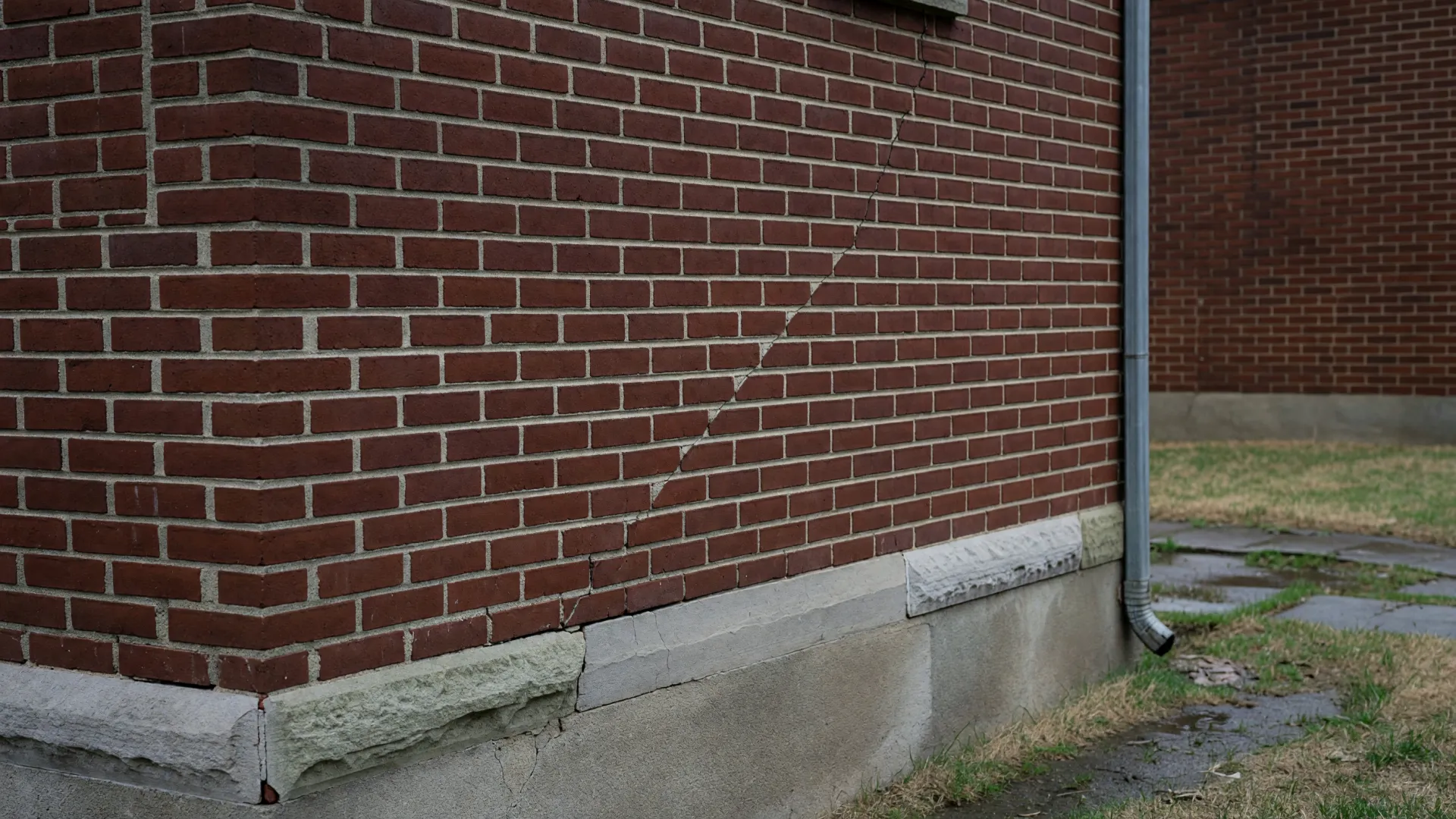
That crack in your brick is a symptom. What moved is the soft clay under your footing. We test it, then inject a structural polymer from below to firm the clay and lift your house back toward level, usually in a single day, with no digging.

  • No excavation
  • Usually one day
  • 40–70% less than piers
  • Licensed & insured
Stair-step crack running up the brick of a Chicago bungalow from the foundation line
Above grade · the symptom
Below grade · the cause Footing Soft clay
Stabilize the clay and the house has something solid to sit on again.

Read the crack before anyone sells you anything

Which Foundation Cracks Need Repair, and Which Don’t

Almost every Chicago basement has a crack. Many are concrete shrinking as it cured, and they need sealing and watching, not a contractor. Four common signs are different: they trace back to the soil, and they keep moving. Here is how the six sort.

Drawing of a Chicago brick bungalow, outside and basement, showing where the six signs appear, from the basement walls and floor to the brick, doors, floors and front stoop, with soft clay under the footings Grade Footing Glacial clay
A Chicago brick bungalow, outside and basement Concrete Soil

Concrete being concrete

Seal it to keep water out, then watch it.

  • Thin, often vertical, and not getting wider. Concrete shrinks as it cures, and this is usually that.

  • Fine lines across the slab are usually curing shrinkage. Seal and watch, same as the wall.

The soil is moving

The cause sits below the footing, and it tends to keep going.

  • The crack climbs the mortar joints because the corner below it is settling into soft clay.

  • The frame was square when it went in. When the footing under it drops, the opening racks.

  • One side of the house now sits lower than the other. The floor is tracing the soil.

  • A widening gap means the ground under the stoop, or under the house, is giving way.

A stable hairline crack does not need us. If it isn’t widening, seal it and get on with your life. Here is how to tell a stable hairline crack from a moving one. When it is the soil, foundation crack repair means fixing the ground under the crack, not filling the line.

Not sure which you have? Book a free estimate and we’ll test the soil.

Foundation repair Chicago · the ground

What’s Under Chicago Homes, and Why It Moves

Your house sits on clay the glaciers left behind. The crack upstairs is a symptom. What moved is the ground under the footing.

Illustrative soil profile under a Chicago house: a bungalow and its basement footing sit in soft glacial clay till near the surface, dense hard-packed till lies below, and limestone bedrock is about 100 feet below street level. Detail A shows the footing pressing into the soft clay while rainwater pools against the foundation wall. Grade 0100 ft about 100 ft Glacial clay till soft · near the surface Hard-packed till Limestone bedrock Detail A Load Water pools Footing Soft clay compresses Soil profile · Chicago, IL Illustrative, not to scale Bedrock about 100 ft down Clay and till boundary varies block to block
  1. Glacial clay till

    historically called Chicago Blue Clay

    Left behind by glaciers that retreated less than 20,000 years ago. It sits near the surface, where a house footing rests, and a Deep Foundations Institute paper describes it as unusually soft. This is the layer that matters.

  2. Hard-packed till

    dense glacial till

    Firm, compact ground under the soft clay. Good bearing, but well below the reach of a house footing.

  3. Limestone bedrock

    about 100 feet below street level

    Solid, and far out of reach for a house.

Load. Soft clay compresses under weight, slowly and rarely evenly, so one corner drops first.

Water. Rain that pools against the foundation softens the clay further, and the weak spots get weaker.

A house weighs far less, but the soil under its footing plays by the same rules on a smaller scale. That is why a repair that lasts treats the clay, not just the crack.

Source: Deep Foundations Institute paper on 120 years of caisson foundations in Chicago

The repair, start to finish

How House Foundation Repair Works Without Digging

Nobody trenches around your house. The fix happens in the clay under the footing, through small probes, and most residential projects are done in a single day. Scroll the six steps and watch the drawing.

Illustrated cross-section of a basement wall and footing that settled into soft clay. A DCP test finds the weak zones, small probes reach them, expanding polymer fills the voids under the footing, and the house lifts back to a level line before the probe holes are patched. Soft clay Density weak DCP Footing Basement Grade Level Inspected, patched

Illustration of the method, not a record of a real job.

  1. Step 1: Test the soil

    A dynamic cone penetrometer (DCP), a steel rod driven into the ground, measures how firm each layer is under your house. The weak zones are found, not guessed.

  2. Step 2: Plan the injection

    A custom injection plan targets the exact depths and locations the testing found. Firm soil is left alone.

  3. Step 3: Place small probes

    Small injection probes go in at predetermined depths, beside and beneath the footing. No trench, no excavation, no torn-up yard.

  4. Step 4: Inject structural polymer

    High-density expanding structural polymer fills the voids, compacts the loose clay and raises the soil’s load-bearing capacity. This is the part that makes the fix last.

  5. Step 5: Lift toward level

    As it expands, it lifts the foundation back toward level, with the lift monitored in real time. Stabilizing and lifting happen in one step.

  6. Step 6: Inspect and patch

    A final inspection, then the probe holes are patched. The polymer stays as a permanent part of the soil mass.

Real engineering, not a sealant: the soil that let your house drop is measured, then made stronger.

  • Won’t shrink, degrade or wash away. It becomes part of the ground under your house.
  • Usually one day. Most residential projects are completed in a single day.
  • Safe around water. Certified safe around drinking water (NSF/ANSI 61), inert once cured.

Done on a real house · Denver, CO

A Settling Home Stabilized in Four Hours, in Denver

A 1950s brick home with a basement had settled, and the cause sat 10 feet below grade, in a layer of weak soil. If your house is older brick over a basement, this is what the fix looked like on one just like it.

Case file Denver, Colorado
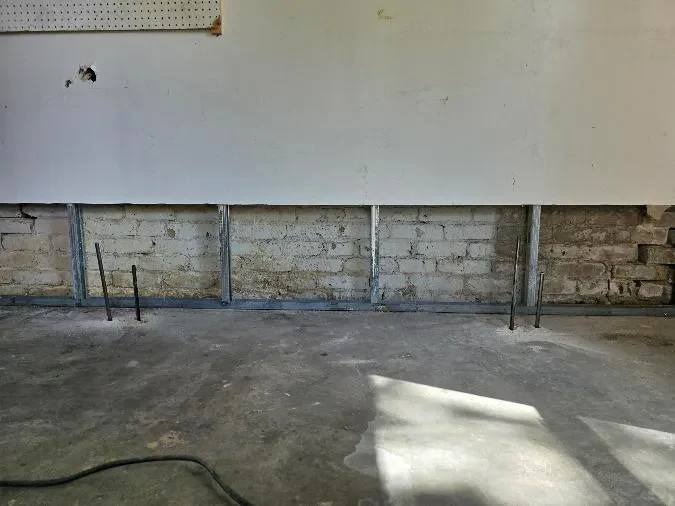
Injection probes set into the floor along a brick basement wall in a 1950s Denver home, drywall cut back at the floor line
Denver, CO Probes every 4 feet along the basement wall
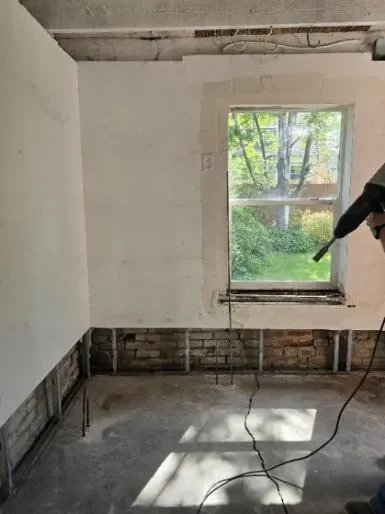
The settled basement wall of the Denver brick home, opened at the floor line while probes go in
Denver, CO The settled wall, worked from inside
  1. Tested The soil was tested first, to find how deep the weak layer went.
  2. Injected Probes went in every 4 feet along the wall, each injected at two depths, right where the soil was soft.
  3. Done Nobody dug around the house. The house was stabilized in four hours.
Start to stabilized
4 Hours
Depth treated, below grade
10 ft
Excavation, no trenches dug
No

Case file Chicago, Illinois Patio

The rear concrete patio at a Chicago home, sunk 3 inches before it was lifted back to level

Slab job Here in Chicago

A Chicago Rear Patio, Lifted Back to Level

This one is a patio, not a house. The rear slab at a Chicago home had sunk 3 inches. It was lifted back to level in under four hours with the same injection method, and downspouts were added so roof water stops soaking the ground beside it.

  • 3 in. sunk
  • Under 4 h back to level
  • Same method

What it costs

What Foundation Repair Cost Looks Like in Chicago

We don't post a price, because nobody can give you an honest one before the soil under your house has been tested. It rests on two things you can't see from the basement: how deep the weak soil goes, and how much ground needs treating. The soil test shows both, and the assessment that includes it is free.

Typical saving vs traditional piers

Relative cost · pier system = full bar

Traditional pier system Excavate at the footing, set piers, backfill

Deep soil injection Small probes, no excavation

Shorter bar, lower cost. The hatched stretch is where your house can land; your soil decides.

40–70% less, typically, than a traditional pier system. Already have a pier quote? That is your yardstick: deep soil injection typically comes in 40 to 70 percent under it. Where your house lands in that range depends on your soil.

Most of the gap is the digging. The polymer goes in through small probes, so there is no trench around your house to dig and backfill, and no yard to put back afterward. How deep soil injection saves 40–70%

Piers or injection

Piers, Foundation Underpinning, and When We're the Wrong Call

Is injected polymer a real fix, or a gimmick next to piers? Fair question. Piers work. So does injection. They fix the same settling house in two different ways, and the difference is what happens to the weak soil.

Soft clay Deeper, stable ground Excavation

Piers and underpinning

Carry the load past the clay

Piers are set beneath the footing and carry your home's weight past the soft clay to deeper, stable ground. A proven method that works.

Soft clay Deeper, stable ground Polymer

Deep soil injection

Treat the soil itself

Polymer goes in through small probes, fills the voids and compacts the loose clay, so the ground your house already sits on can carry it.

The weak soil

PiersStays in place under the house

InjectionFilled, compacted, strengthened

Your yard

PiersExcavated at the footing

InjectionSmall probe holes, patched

Time and cost

PiersCosts more

InjectionUsually one day, typically 40–70% less

When we're the wrong call

Injection fixes soil. Sometimes the soil isn't the problem, and we'll tell you so.

  • The foundation itself has failed

    If the walls or footing are structurally broken, firm soil won't put them back together. That house needs foundation replacement.

  • A hairline crack that isn't moving

    Often it's just concrete shrinking as it cured. It needs sealing, not repair. Seal it, keep an eye on it, and move on.

See everything we do for homes

Foundation Repair Chicago · Choosing who to call

What to Ask Any Foundation Repair Company in Chicago

Search results are full of foundation repair contractors and directory listings. Most will give you a price. Fewer will tell you what is under your house. These five questions sort them out. Ask them of anyone, us included.

  1. Do you test the soil before you quote?

    A price given from the driveway is a guess about what is under your house.

    Stratalock: DCP testing first

    Yes. Soil density testing with a dynamic cone penetrometer (DCP) comes first. The plan and the price come from what it finds.

  2. Does the fix treat the cause, or only the crack?

    Sealing a crack covers the symptom. If the soil keeps moving, the crack comes back.

    Stratalock: Treats the soil

    The cause. Structural polymer goes into the weak soil, firms it up and lifts the foundation back toward level.

  3. Will you need to dig around my house?

    Excavation means a torn-up yard, more days on site and a bigger bill.

    Stratalock: No digging

    No excavation. Small probes go in at set depths, and the holes are patched at the end.

  4. How long will the work take?

    Ask for a number of days, in writing, before you sign.

    Stratalock: Usually one day

    Most homes are finished in a single day.

  5. Are you licensed and insured?

    Ask to see both before anyone starts work on your home.

    Stratalock: Licensed & Insured

    Yes. Licensed and insured contractors, with 40+ years of combined experience.

LAKE MICHIGAN GREATER CHICAGO AREA Lincoln Park Skokie Schaumburg Grayslake N
Schematic, not to scale

Where we work

City and suburbs, all around Chicago

We work across the greater Chicago area, city and suburbs, north, west and south, from Lincoln Park to Skokie, Schaumburg and Grayslake. If you typed foundation repair near me from anywhere in it, the assessment comes to your house, soil test included.

Not on the map? Call and ask.

Stratalock in Chicago

Before you call

Foundation Repair Chicago Questions, Answered Straight

What homeowners ask before anyone looks at the house, answered short, with a plain “you don’t need us” where that is true.

Not on the list?

Ask it at the free on-site assessment, or call (855) 850-5625.

  • Yes. The clay near the top of Chicago soil is unusually soft and compresses under load, so testing maps the weak zones and the probes go to the depths it sets. On a 1950s brick home in Denver, the weak soil sat 10 feet below grade and was stabilized there in four hours. Read the Denver case

  • An honest figure needs the soil tested first. The price is set by how deep the weak soil goes and how much area needs treating, so it comes from the free on-site assessment. As a guide, deep soil injection typically runs 40–70% less than traditional pier systems, largely because it skips the excavation. Where the 40–70% comes from

  • No. Hairline cracks in a poured basement wall and thin cracks across the basement floor are often concrete shrinking as it cured: seal them and watch. Stair-step cracks in brick, sticking doors and sloping floors trace back to the soil and tend to keep moving. Telling a stable hairline crack from a progressive one

  • Most homes are finished in a single day. The soil is tested, small probes go in at set depths, the polymer is injected while the lift is monitored in real time, then a final inspection and the probe holes are patched.

  • Both, in one step. The polymer fills voids and compacts loose soil, so the ground carries more. As it expands, it lifts the foundation back toward level. It will not shrink, degrade or wash away. See the process

  • No. There is no excavation and no trench around the house, only small probes, patched at the end. A sunken patio or walk is a separate job: concrete leveling in Chicago.

  • Across the Chicago area, from city neighborhoods like Lincoln Park to suburbs including Skokie, Schaumburg and Grayslake. Call (855) 850-5625 or book a free estimate, and the assessment comes to your house.

Free on-site assessment

Find Out What's Moving Under Your House

The crack tells you something moved. The assessment tells you what: the concrete, or the clay under your footing. The foundation repair Chicago homes need starts with a soil test, not a sales pitch.

What you'll hear

  • If it's the concrete

    Seal it and watch it. You don't need an injection.

  • If it's the soil

    A plan for your depths, a real figure, and usually a single day of work.

  • If it's nothing

    You hear that too.

Sunken driveway or patio instead? See concrete leveling in Chicago.