
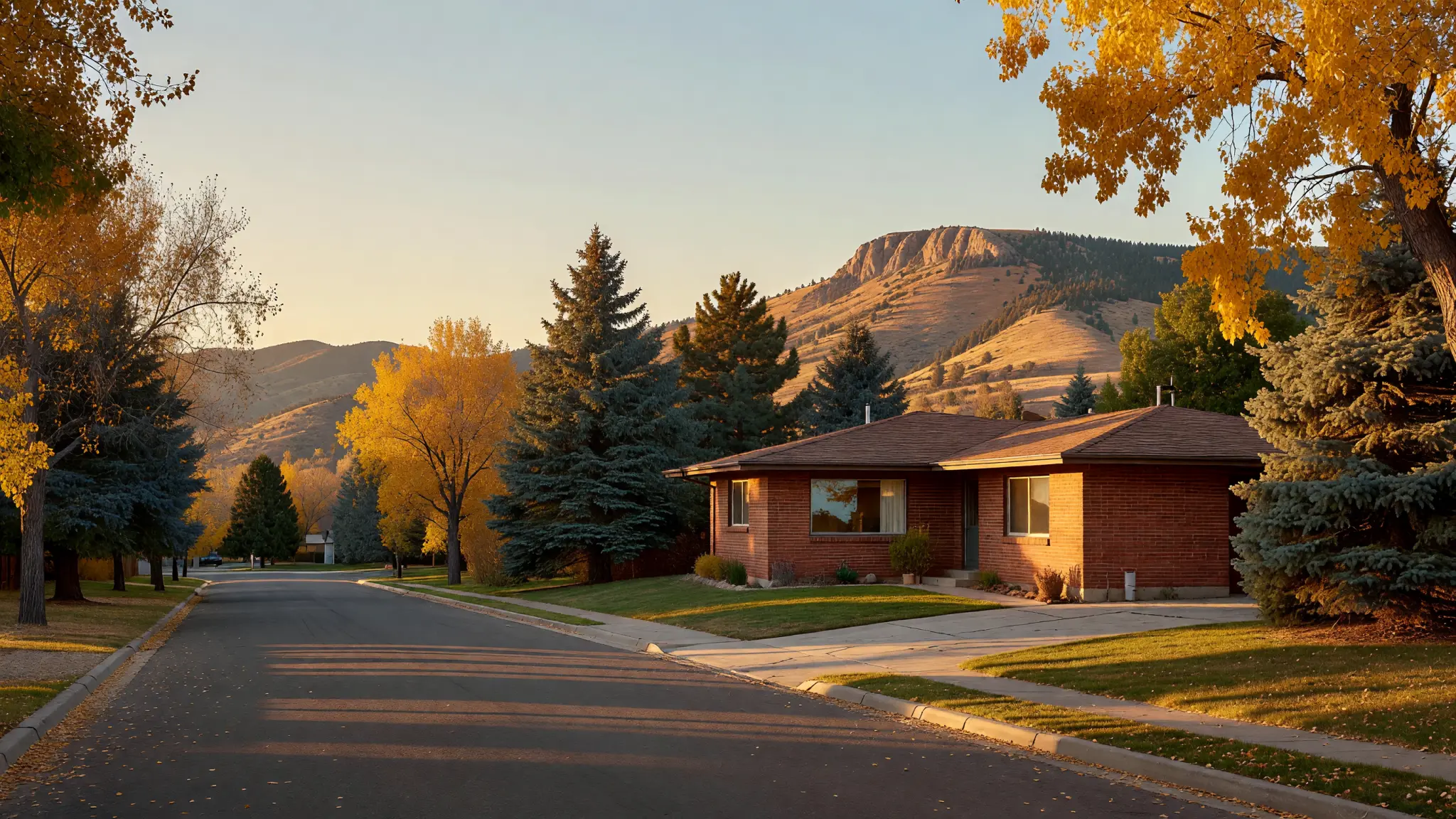
A 1960s red-brick ranch house on a quiet tree-lined street, with the foothills behind it in late-afternoon light

Foundation repair Lakewood, Colorado

Foundation Repair in Lakewood That Starts Under the House

Your house is moving because the ground under it is. That's where we fix it. For homes in Lakewood, Colorado, Stratalock injects polymer into the weak soil beneath the foundation: no digging, and most homes are done in a day.

  • Licensed & Insured Contractors
  • 40+ Years Combined Experience
  • No Excavation

Under the slab Polymer goes into the weak soil and firms it from below. The yard stays as it is.

What you’re seeing

Cracks, Sticking Doors, Sloping Floors: What They’re Telling You

Most searches for foundation repair, Lakewood or anywhere along the Front Range, start with something small: a crack over a doorway, a door that won’t latch. Some of it is just a house being a house. What matters is whether it’s still moving.

How to tell Pencil a short line across each end of a crack and write the date beside it. Look again next season. If it has run past your marks or opened wider, it’s still moving.

  1. Wall & Ceiling Cracks

    Cracks appearing in drywall, plaster, or brick are often the first visible sign of foundation movement caused by unstable soil beneath your home.

    Can be watched
    A hairline crack that stays the same width, season after season.
    Points at the soil
    A crack that keeps getting wider or longer, or steps through the brick.
  2. Uneven or Sloping Floors

    Floors that slope or feel uneven usually mean one part of the foundation is sinking faster than the rest, because the soil under it is weak.

    Can be watched
    A slight slope that has been there as long as you have, and isn’t changing.
    Points at the soil
    A floor that slopes a little more each season.
  3. Sticking Doors & Windows

    When doors and windows become difficult to open or close, it often means the foundation has shifted, pulling the frames out of line.

    Can be watched
    A door that sticks for a few weeks, then swings freely again.
    Points at the soil
    A door that stops latching and stays that way, or a gap opening above it.
  4. Slab & Foundation Settlement

    Visible sinking of the foundation or concrete slabs, gaps between walls and floors, or joints pulling apart all point to soil giving way underneath.

    Can be watched
    Fine cracks in a basement slab that don’t open up or change height.
    Points at the soil
    A gap growing between slab and wall, or one side of a crack sitting lower.

The crack is the symptom. The ground is the cause.

A sign that keeps growing won’t stop because the crack is patched; the soil under that corner is still moving. The free on-site assessment tests that soil and tells you straight whether it needs anything at all.

What causes foundation problems

What’s under the house

Lakewood Ground Moves Two Ways

Some ground pushes a house up. Some lets it drop. From the living room the crack looks the same, but the fix is different. Here’s the ground from the foothills east, and the one problem polymer injection is built for.

  • Pushes up: fix the water first
  • Lets it drop: what injection fixes
Cross-section: bedrock layers tilted steeply east beneath the hogback ridge, with a house lifted by a heaving layer.

Pushes up

Rock tilted on edge, near the foothills

Near the Hogback, the long rocky ridge where the foothills begin, layers of rock are tilted on edge, 30 to 90 degrees. Some are clay rock that swells, close to the surface. Jefferson County calls this the Designated Dipping Bedrock Area.

Where water gets in, the county has mapped ridges of rock pushed up as much as two feet.

The damage is patchy, so one house can crack while the one next door doesn’t. Repair here can need an engineer’s design, and may mean deep piers. That isn’t our fix, and we’ll tell you so.
Cross-section: a pocket of loose soil with open voids under one footing, letting that corner of the house sink.

Lets it drop

Weak, loose soil and hidden gaps

Loose soil, badly packed fill dirt and hidden gaps can’t carry the weight of the house. One corner sinks, and the house follows it down.

This is what polymer injection fixes. A dense polymer fills the gaps and firms up the soil from below. No digging, and most homes are done in a single day.

Cross-section: flat clay layers swelling with water from the surface, pushing a house up.

Pushes up

Swelling clay, further east

The Colorado Geological Survey calls swelling soil Colorado’s most significant geologic hazard. These clays can swell up to 20% when they get wet, and they lie under many of Colorado’s towns and cities.

The first fix is water: gutters, downspouts and grading that carry it away, and no planting or irrigation right against the foundation.

Which one is under your house? A soil test is how you find out.

Nobody can tell you from the street. The free on-site assessment tests the soil under your foundation. If it’s weak soil, we’ll show you the fix. If it’s clay or bedrock pushing up, we’ll say so and point you to the water, or an engineer, first.

Request a free estimate

Sources: Colorado Geological Survey, Expansive Soil and Rock; Jefferson County, Geology and its Designated Dipping Bedrock Area Guide (PDF).

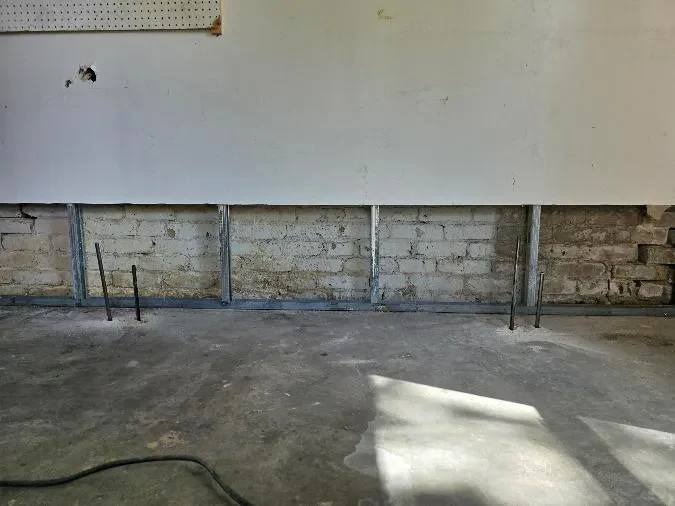
Steel injection probes standing in a basement floor along the base of an old brick and block foundation wall.
Denver, CO Injection probes along the basement wall of the 1950s brick home.

Case study · Denver, CO

A Settling Denver Home, Stabilized in Four Hours

A 1950s brick home a short drive from Lakewood had started to settle. Here’s what we found under it, and how it was fixed without digging.

  • 4 Hours Start to finish
  • 10 ft Depth treated
  • None Excavation needed
  1. Tested before anything else

    A soil test measured how firm the ground was under the house. It found weak, loose soil down to about 10 feet below the ground, too weak to hold up the brick foundation.

  2. Injected only where it was weak

    Injection points went in 4 feet apart along the affected area, each injected at two depths to cover the whole weak layer.

  3. Stable in four hours

    No excavation, no torn-up yard, and the family stayed home while the crew worked.

If your house is settling, the free on-site assessment starts with the same soil test, so you know whether this fix fits before anyone quotes it.

The process

How Foundation Repair Works Without Digging

No trench around the house, no heavy machinery on the lawn, and no moving out. The work happens through a few small holes beside your foundation.

  • No trench or excavation
  • You stay in your home
  • Most homes done in a single day
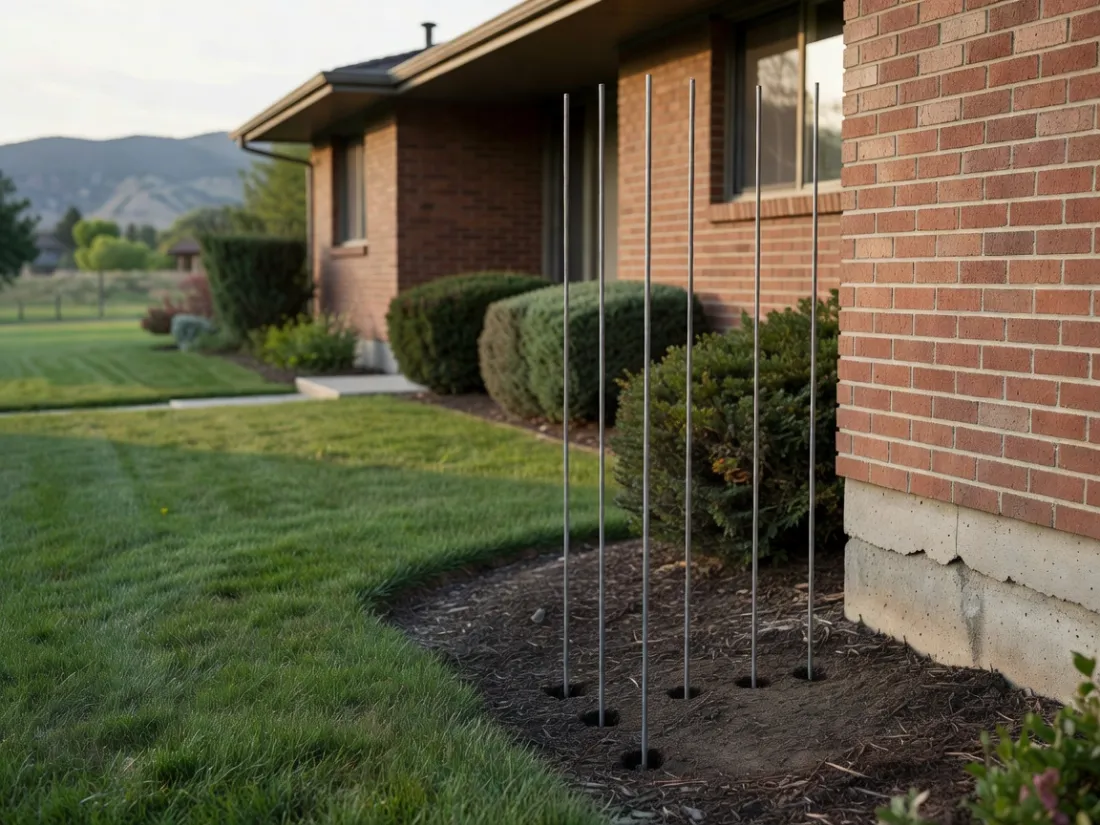
Slim injection probes in a mulch bed beside a brick ranch home's foundation, lawn and shrubs undisturbed.
Probes go in through small holes. The lawn and shrubs around them stay put.
  1. Test the soil

    We push a slim test probe into the ground to measure how firm the soil under your foundation is, so we find where it’s weak and how deep the weakness goes.

  2. Plan where the polymer goes

    The test results become a custom injection plan: the exact spots and depths that need support, and nowhere else.

  3. Drive small probes

    Slim injection probes go down to those depths beside the foundation. Nothing is dug up, and your lawn and beds stay where they are.

  4. Inject the polymer

    A dense, strong polymer goes into the weak soil. As it expands it fills voids, compacts the soil and raises how much weight it can carry.

  5. Watch the lift as it happens

    We monitor lift and soil response in real time while we inject, adjusting as we go so the foundation comes up evenly.

  6. Inspect and patch

    A final inspection confirms the foundation is supported and the soil is stable. Then the probe holes are patched.

Step one is the free on-site assessment. It tells you whether you need the other five at all.

What it takes

Piers, Injection, or Neither

Piers are what most people picture when they think of foundation repair. They work. But there are three honest answers to a moving house, and the cheapest one is sometimes the right one.

Works around the soil

Traditional piers

What it does
Steel piers, driven or screwed deep into the ground, skip past the weak soil and carry your house down to firmer ground.
Your yard and your week
Digging around the foundation, heavy machinery, then the yard put back. Typically one to two weeks.
Cost
The most of the three. You pay for the digging, the machinery and putting the yard back as well as the piers.
The right call
When your house needs to rest on much deeper ground, as on some tilted bedrock. They work, and we’ll tell you if you need them.

Fixes the soil

Polymer injection

What it does
An expanding polymer is pumped deep into the weak soil, filling the gaps and packing it firm so it can hold your house up again.
Your yard and your week
Small probes, no digging, and you stay home. Most residential projects are done in a single day.
Cost
Typically 40–70% less than traditional pier systems.
The right call
When weak, loose soil or gaps under the foundation are letting the house sink.

Nothing to fix

Neither

What it does
Water is the problem, or nothing is moving. Fix the gutters, downspouts and the slope of the ground around the house, and keep an eye on the crack.
Your yard and your week
Nothing for us to do at your house.
Cost
Nothing from us.
The right call
When clay is swelling with water, or a crack stays the same width season after season.

You don’t have to guess which one. Your free estimate tells you.

It’s an on-site visit: we test the soil under your foundation and tell you straight which one fits, including when the answer is neither.

Where the 40–70% savings come from

Straight answers

Foundation Repair Questions from Lakewood Homeowners

What people ask about Lakewood foundation repair before they let anyone near their house. If yours isn’t here, ask us on the phone.

Call (855) 850-5625

What does foundation repair cost in Lakewood?

There’s no single price for foundation repair. Lakewood houses differ in what’s moving them and how much needs work, so a price before anyone has tested the soil would be a guess. That’s why the free estimate comes first: an on-site assessment where we test the soil and give you a straight answer.

When weak soil is the cause, polymer injection is typically 40–70% less than traditional pier systems. There’s no excavation, no heavy machinery and no yard to put back.

Is it even serious, or am I being sold to?

Some cracks are just concrete shrinking and stay the same width for years. Others keep growing because the soil underneath is moving. The free assessment tests the soil under your foundation and tells you which.

If nothing is moving, or the fix is gutters, downspouts and grading, we’ll say so plainly. You don’t need us for that.

Will it hold, or will my house move again?

The treated soil holds. Once the polymer sets it stays part of the soil for good, and it won’t shrink, break down or wash away, so the soil stays as firm as we made it.

Injection fixes weak soil. If something else is moving your house, such as clay swelling with water, the assessment will tell you before any work is done.

Will it lift my house back, or just stop it sinking?

Both. The polymer firms the soil, and as it expands it can raise the part of the house that settled. We watch the lift as we go and adjust, so it comes up evenly.

How far a settled corner can come back depends on the house. The free estimate, an on-site assessment, tells you what to expect before any work is done.

Is my soil swelling or sinking, and does this fix work for both?

It’s built for sinking. Weak, loose soil and gaps that let part of the house drop are what polymer injection fixes. Clay that swells with water pushes a house up, and that fix starts with the water, sometimes with an engineer’s design.

The ground drawing above shows the difference. A soil test is how you find out which one is under your house.

Will the repair tear up my yard?

No. Piers mean digging around the foundation. Polymer injection uses small injection tubes driven straight into the soil: no digging, no trenching, and no damage to your landscaping, concrete or the structures around them.

Can I stay in my house while you work, and how long does it take?

Yes, you stay home. Most residential projects are completed in a single day, and the polymer starts strengthening the soil as it goes in, so you see the result the same day.

In our Denver case study, a 1950s brick home, the job took four hours start to finish and the family stayed home throughout.

Do you actually work in Lakewood?

Yes. If you need foundation repair, Lakewood, CO is part of Stratalock’s Denver-area service. Request a free estimate or call (855) 850-5625 and we’ll come out and test the soil under your house.

Will insurance pay for foundation repair?

Usually not. Most homeowner policies exclude settlement and earth movement. Policies differ, so check yours or ask your agent before you decide either way.

My patio or front walk has sunk too. Can you fix that?

That’s a different job: lifting and levelling the slab itself rather than stabilizing the soil under your foundation. See concrete lifting for sunken patios, walks and driveways, and mention it when you book your assessment.

When the ground under a slab keeps dropping, that ground can be firmed up too: see soil stabilization in Denver for homes, slabs and commercial floors.

Your next step

Find Out What’s Moving Your House

Thinking about foundation repair? Lakewood is part of the Denver area we cover, and your free estimate is one visit: a soil test and a straight answer, before anyone talks about work. Asking doesn’t commit you to anything.

  1. You ask

    Request a free estimate or call us, and we set up a visit to your house. That visit is the estimate.

  2. We come out and test the soil

    We look at the cracks, doors and floors you’ve noticed, then measure the density of the soil under your foundation.

  3. You get an answer and a plan

    What’s moving, why, and what it would take, before any work is booked. If it only needs watching, that’s what we’ll say.

It costs nothing to find out. The decision stays yours.