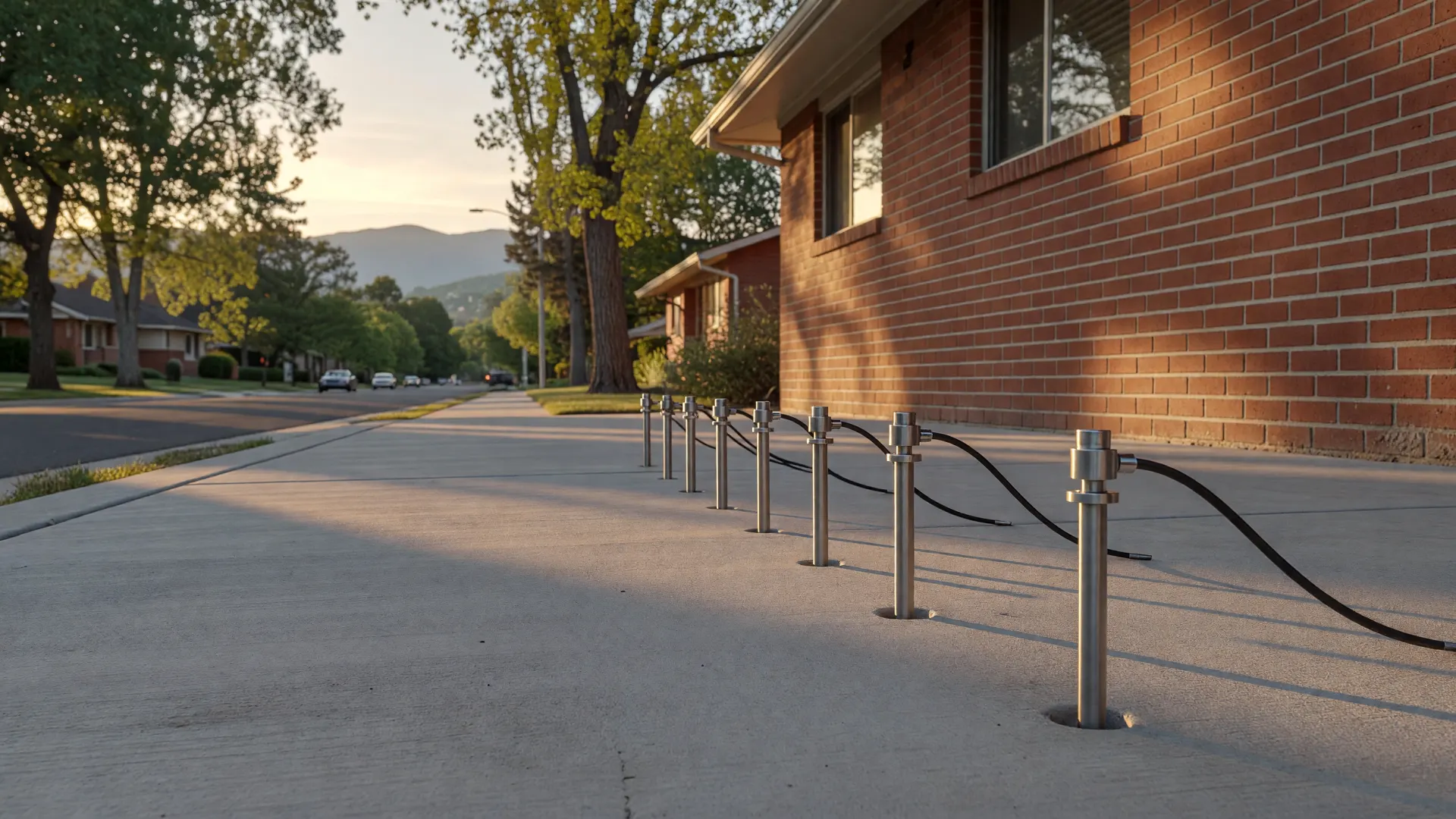
Denver, CO · Homes, slabs and commercial floors
Soil stabilization in Denver that fixes the ground, not just the crack
When a house, slab or floor keeps sinking, the weak soil underneath is what moved. The soil stabilization Denver homes and buildings need starts with a free test that shows what the ground is really doing, then firms it up in place through small probes. No digging, and usually done in a day.
- Free soil test We measure how weak the ground is, and how deep.
- Small probes, no digging Structural polymer goes in through small probes, not a trench.
- Firm ground, usually in a day The weak soil is strengthened where it sits, under what you already have.
One method, three places
What soil stabilization fixes in Denver
Under a house, under a slab, or under a commercial floor, the soil stabilization Denver owners ask about works the same way: find the weak soil, then firm it up where it sits. Pick yours to see where the probes go, and a real job of that kind.
This is for the ground under something already built, not site prep for new construction.
Under a house
The probes go down past the foundation to the weak layer, however deep it sits.
-
Denver, CO
A 1950s brick home settling on weak soil 10 feet below ground
- To stabilize
- 4 hrs
- Depth treated
- 10 ft
- Excavation
- None
We ran a soil density test first to find how deep the weak ground went, then set injection points 4 feet apart and filled each one at two depths.
Read the Denver home case study
Not sure which you have? The free estimate starts with a soil test.
Under slabs
The probes go through the slab into the loose soil and voids just under it.
These two jobs were in other places we work, done with the same method we use in Denver. Our Denver job is the house.
-
Chicago, IL
A rear patio that had sunk 3 inches
- Settlement fixed
- 3 in
- Start to finish
- < 4 hrs
The patio was lifted level and the soil under it stabilized, with new downspouts added for drainage.
Read the Chicago patio case study -
Kansas City, MO
A settling, cracked swimming pool
- One working day
- 8 hrs
The voids were filled and the ground under the pool stabilized in a single day.
Read the Kansas City pool case study
Not sure which you have? The free estimate starts with a soil test.
Under commercial floors
The probes go in on a grid across the floor, a section at a time, while the building keeps running.
This job was in another place we work, done with the same method we use in Denver. Our Denver job is the house.
-
Ellettsville, IN
A food distribution warehouse with settling dock and staging floors
- Sq ft stabilized
- 44,000
- Total time
- < 24 hrs
- Business interruption
- Zero
The dock and staging area flooring was stabilized while the warehouse kept shipping.
Read the Ellettsville warehouse case study
Not sure which you have? The free estimate starts with a soil test.
A real Denver job
A Denver home stabilized in four hours
This is one house, start to finish. It is not a promise that every job takes four hours. It is what soil stabilization looked like on a real Denver foundation.
-
The problem
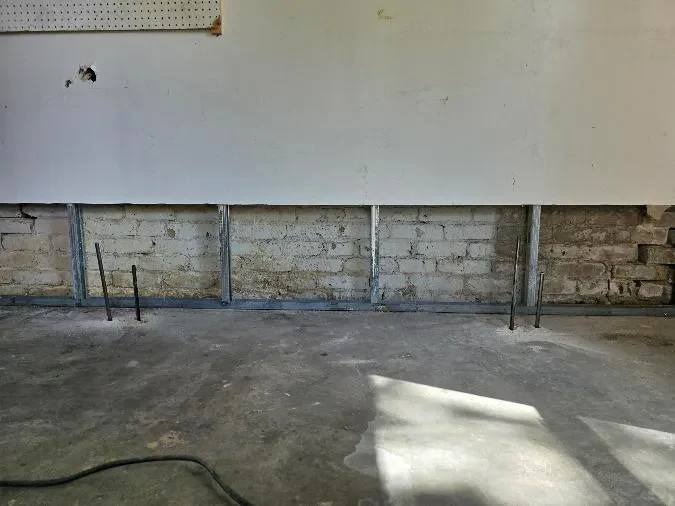
A 1950s brick house in Denver had significant foundation settlement. The cause was weak soil deep below ground.
-
What the test found
Before anything went into the ground, a soil density test showed where the soil gave way: about 10 feet below ground.
-
What we did
Injection points went in 4 feet apart along the foundation. Each one was filled at two depths, so the polymer reached the weak layer and the soil above it.
-
How it ended
The foundation was stabilized in four hours. Nothing was dug up.
Your ground will have its own depth and spacing. The free estimate starts with the same test, so you know what yours needs before you decide anything.
On the day
How soil stabilization works, step by step
This is the day in the order you would see it, from the first test to the last patched hole. The ground gets fixed from above, so nothing is dug up.
- Most homes
- Usually one day
- Commercial floors
- One to two days
-
Test the soil
First we measure the soil’s density, so we know how weak the ground is and how deep the weak layer goes. Nothing is injected until this is done.
-
Plan the depths
The test sets the plan: where each injection point goes and how deep it reaches. Your ground gets its own spacing and depths, not a standard pattern.
-
Drive small probes
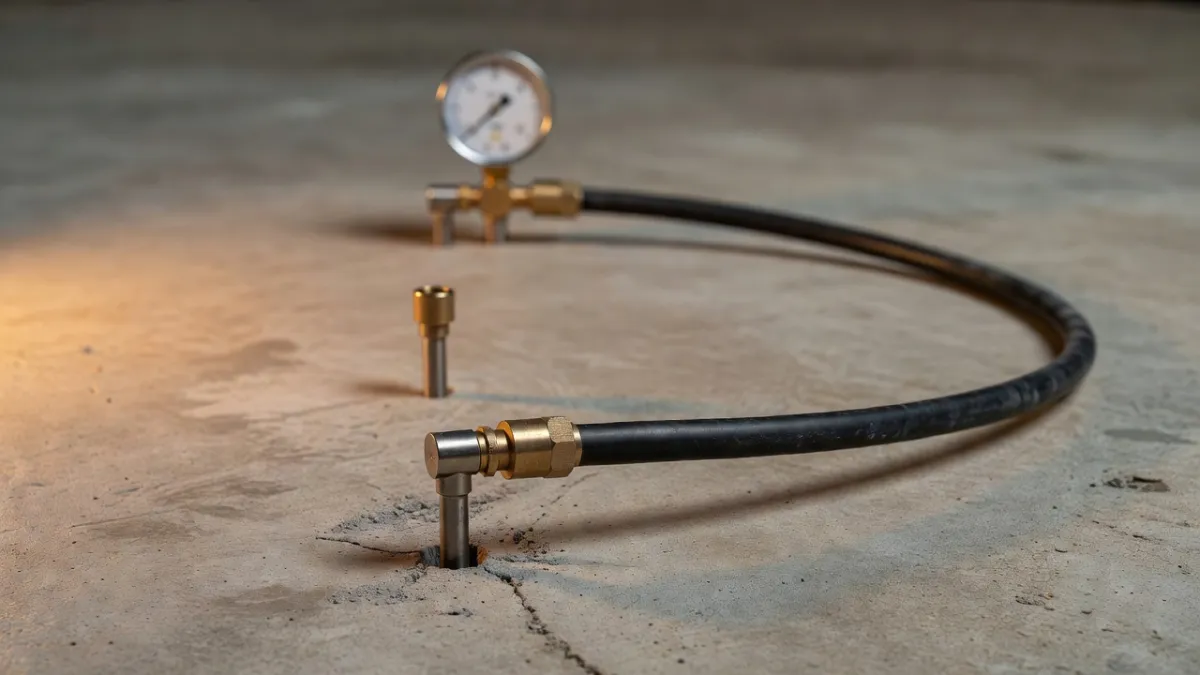
Small probes go through the slab or into the soil, down to the planned depths. There is no trench and no excavator on your lawn or driveway.
-
Inject the polymer
A high-density structural polymer goes in and expands. It fills the voids, compacts the loose soil and raises how much weight the ground can carry.
-
Watch the lift live
The slab or foundation is monitored in real time while the polymer goes in, so each injection stops when the ground is firm and the surface is where it should be.
-
Inspect and patch
A final inspection, then the small probe holes are patched. The weak soil has been strengthened where it sits, under what you already have.
Step one is part of the free estimate, so the test costs you nothing either way.
See the full Stratalock processCost
What soil stabilization costs compared with piers
The short answer: usually less. Piers are a sound repair, and they cost more for a plain reason. Here is how the two compare, and what sets the price on your ground.
Traditional piers
- How it fixes the problem
- Steel piers carry the weight of the house down past the weak soil to firmer ground below it.
- What it takes on site
- Digging beside the foundation to set each pier, then backfilling once they are in.
- What it costs
- The higher price of the two, with the digging and the steel posts both part of the job.
Soil stabilization
- How it fixes the problem
- Polymer strengthens the weak soil itself, where it sits, so the ground can carry the weight again.
- What it takes on site
- Small probes through the slab or into the soil, down to the depths the test found. No trench.
- What it costs
- Usually 40–70% less than traditional piers on a home.
40–70% less
than traditional piers, for soil stabilization under a home
60%+ less
than traditional methods, for soil improvement under a commercial floor
That is what owners usually save against those methods. Your own price comes from the soil test on your ground. More on soil stabilization for homes and for commercial floors.
Your price follows the soil test
There is no flat rate for soil stabilization. Denver ground changes from one lot to the next, and no two patches are weak in the same way. Two things set the number, and the test measures both.
-
How deep the weak soil goes
Weak soil near the surface takes less than a weak layer far down, like the one 10 feet below the Denver house above. Each probe is filled at the depths the test calls for.
-
How many probes the ground needs
The size of the area that is moving, and how tightly the probes are spaced across it, sets the count.
Already have a pier quote? Keep it. The soil test is part of the free estimate, so you end up with two prices for the same ground and can compare them side by side.
Get your free estimateBefore you book
When soil stabilization isn’t what you need
Polymer firms up soil that is weak or loose. Some problems are not that, and injecting them would cost you money and fix nothing. These are the three we would tell you about.
-
A crack that has stopped growing
Concrete cracks as it cures, and a house can settle a little and then stop. If the crack is the same length it was a year ago and the doors still close as they did, the ground may be done moving.
What it needs instead
Watch it. Pencil a mark and the date at each end of the crack, then look again in a few months. If it grows past the marks, that is the time to call.
-
Clay that swells and pushes a slab up
If a floor or slab is rising rather than sinking, the clay under it is taking on water and swelling, and injection will not stop that.
What it needs instead
Keep the water away first. Read how Denver soil can push a house up as well as let it sink.
-
A foundation that has failed structurally
When the foundation itself is broken through, bowing or crumbling, firmer ground under it will not make the concrete sound again.
What it needs instead
It may need repairing or replacing first. Strengthening the soil can come after, if the test says the ground is weak too.
The soil test tells you which
Every free estimate starts by measuring the soil under you. If the ground is not weak, the test shows it, and we will say so before you are asked to pay for anything.
Not sure which one you have? Call (855) 850-5625 and describe what you are seeing.
Questions
Soil stabilization questions from Denver owners
Five things owners ask once the soil is the suspect, each answered plainly.
Something else on your mind? Call (855) 850-5625 or request a free estimate.
Will the ground sink again after soil stabilization?
The polymer becomes part of the ground. It expands into the gaps that let the soil settle, compacts the loose soil around them and cures there, and it will not shrink, degrade or wash away, so the strength it adds does not fade with time. That is why we test first: the treatment goes to the depth where the soil is actually weak, not just under the surface.
Do you actually come out to Denver properties?
Yes. The free estimate is an on-site visit to your Denver property: a licensed and insured crew tests the soil there, rather than quoting from photos. Denver is one of the four metro areas Stratalock serves, along with Chicago, Phoenix and Kansas City. A Denver home we stabilized shows what that looks like.
Will you dig up my yard or driveway?
No. Soil stabilization, Denver or anywhere else we work, is done from above: small probes go through the slab or into the soil, down to the depths the test found. There is no trench and no excavation along the foundation. When the work is done, the probe holes are patched, and your lawn, garden beds and driveway stay where they are.
Can we stay in the house, or keep a business open?
Yes. Most owners stay home through it, and businesses keep running. There is no digging, so no open trench or torn-up ground to live beside. Most homes are finished in a single day, and most commercial floors in one to two days. A warehouse in Indiana had 44,000 square feet of dock and staging floor stabilized in under 24 hours with no break in its business.
Is the polymer safe near my water lines and garden?
The polymer is certified to NSF/ANSI 61, the standard for materials that touch drinking water. Once it cures it is inert and does not leach, so it is not putting anything into the soil around your water lines, plants and beds.
Free estimate
Find out what the ground under you is doing
Right now you have a crack, a drop or a quote, and a guess about the soil underneath. The free estimate swaps the guess for a measurement. We come out to your Denver property, test the soil, and tell you whether it needs stabilizing before any soil stabilization Denver crew quotes you anything.
The visit costs nothing, and the decision stays yours.
What you leave the visit with
-
Where the weak soil is
Measured on your property, down to the layer that is giving way under your house, slab or floor.
-
A straight yes or no
Whether stabilizing is the right fix for your ground, or whether something else is.
-
A price, only if it is a yes
Built from your own test results, so you can set it beside any quote you already have.