Spring: the clay swells
Rain soaks in and the clay takes on water and grows. It presses sideways on your basement walls. That steady push is what cracks a wall across and tips it inward.
The crack in your wall is the symptom. The clay under your footing is what moved: it swells when wet, shrinks when dry, and each season shifts your house a little unevenly. We stabilize that clay and lift the foundation from below, usually in a single day, with no digging.
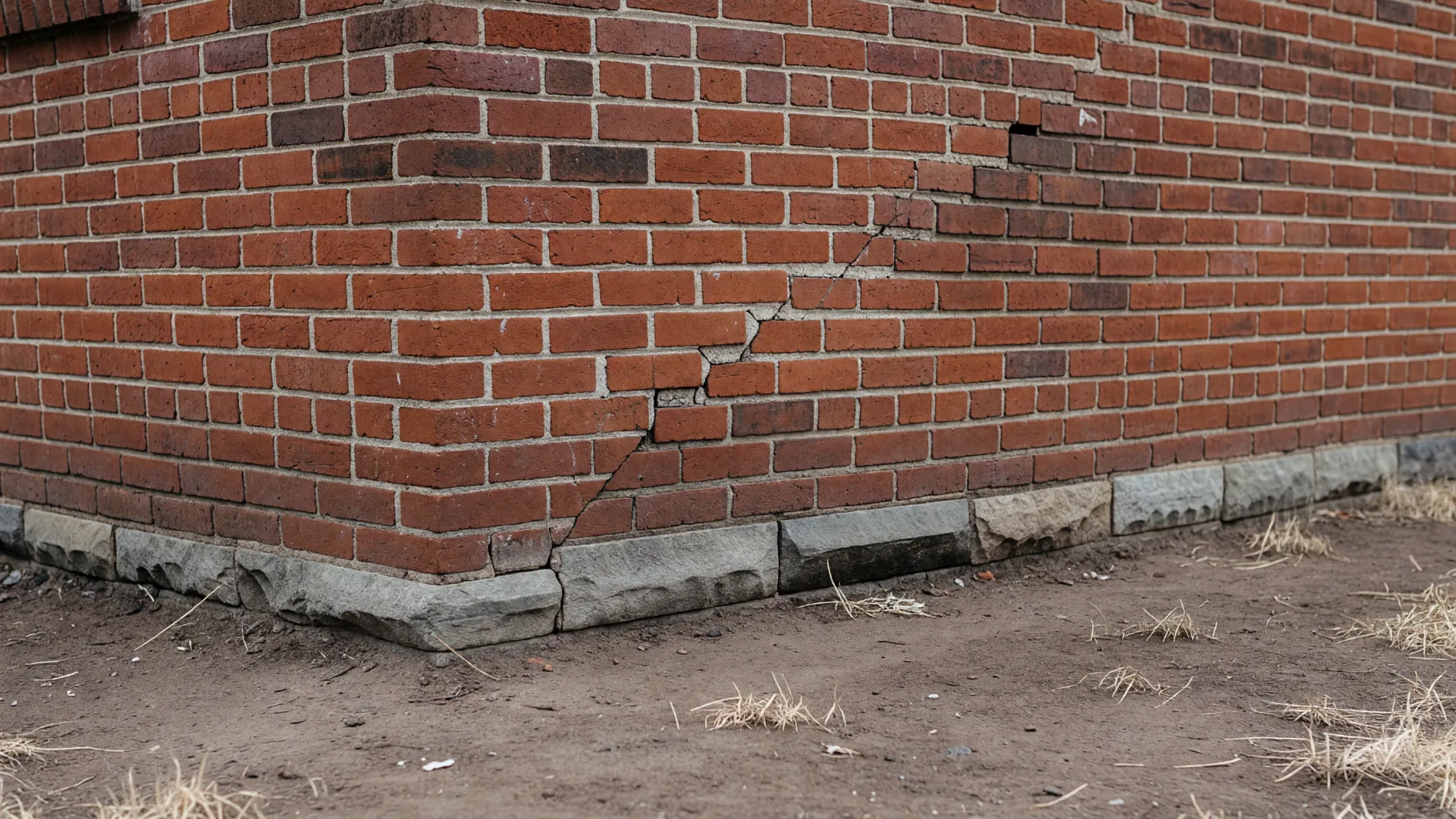
Not every crack in a Kansas City basement means trouble. Some are concrete doing what concrete does. Others are the clay underneath pushing and pulling on your house. Here is how to tell them apart, before anyone tries to sell you anything.
Seal it, watch it, and go about your life.
Poured concrete shrinks as it cures. A thin crack that stays the same width is usually just that.
Verdict: seal and watchThe slab shrinks too. Fine lines that never widen or lift are cosmetic.
Verdict: seal and watchA stable hairline crack does not need us. Seal it to keep water out, mark its ends, and check it each season. Here is how to tell a stable hairline crack from a moving one.
These trace back to the clay, and they tend to keep going.
The mortar splits along a diagonal as one part of the footing drops or heaves.
Verdict: fix the soilWet clay swells and pushes on the wall from outside until it cracks across and tips inward.
Verdict: fix the soilFrames pull out of square when the house around them settles unevenly.
Verdict: fix the soilClay under part of the footing dried and shrank, and that corner went down with it.
Verdict: fix the soilOne exception. A wall that has already bowed far inward needs structural wall repair, and an honest assessment should tell you so.
Not sure which one you have? Book a free estimate and we will test the soil and tell you straight.
Most of the metro sits on expansive clay, and your basement is set right down in it. That clay shifts dramatically with moisture and the seasons. Here is one year of it, under one house.
Rain soaks in and the clay takes on water and grows. It presses sideways on your basement walls. That steady push is what cracks a wall across and tips it inward.
As the ground dries, the clay pulls back from the walls and drops. Your house settles with it, but never quite evenly.
Dry clay shrinks and splits. Under part of the footing it pulls away altogether, and that side of the house sinks into the gap. The wall crack opens a hair wider.
The rain returns and the clay swells again, but not to where it started. Each cycle is a little uneven, so your house moves a little unevenly, and the cracks follow.
Under the clay is rock. Limestone and shale lie beneath the metro, the same rock the city's underground limestone mines are cut from. But your house does not sit on the rock. It sits on the clay above it, and the clay is what keeps moving.
Patching the crack treats what you can see. Treating the clay is what lasts.
No trench around the house and no week of heavy equipment in the yard. We test the soil, treat the weak layers through small probes, and bring your house back toward level as the polymer expands.
A steel rod driven into the ground around your house measures how firm the soil is at each depth (a dynamic cone penetrometer), finding the weak zones.
A custom injection plan sets the depths and locations to treat, drawn from what the testing found under your house.
Small injection probes go down to predetermined depths beneath the footing. No trench, no excavation, no heavy steel.
High-density expanding structural polymer fills voids and compacts loose soil, so the ground carries more weight.
As it expands, it lifts your foundation back toward level. We monitor the lift in real time, so stabilizing and lifting happen in one step.
A final inspection checks the result, and the probe holes are patched before we leave.
Illustrations, not to scale.
The polymer becomes a permanent part of the soil mass, so the next wet spring and dry August meet treated ground.
Most residential projects are completed in one day, start to finish.
Certified safe near drinking water (NSF/ANSI 61). Inert and non-leaching once cured.
Want the detail? Read the full process, step by step, or how soil stabilization under a house works.
The same method, in the same metro, on the same ground: a Kansas City pool stabilized in one eight-hour day, and an Overland Park office floor lifted back to level. The house example is from Denver, a 1950s brick home settled on weak soil and stabilized in four hours. Each file says what it is.


A crack in the shell had leaked for some time, washing out the soil and opening large voids under most of the pool. Soil testing found the cause, and the injection plan went straight at the voids and the weak soil.


A high-volume break washed out the soil under the slab and opened voids. Polymer went in through a grid of small ports, filled the voids, firmed up the soil under it and lifted the floor back to level. Deep soil injection under the exterior footing stabilized the foundation.
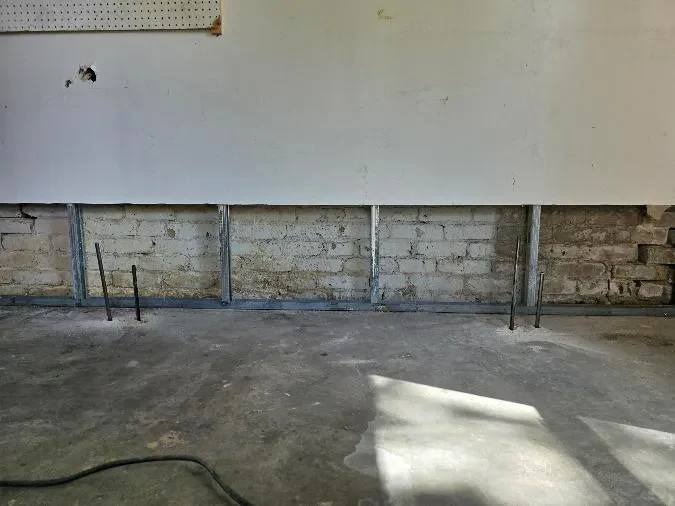
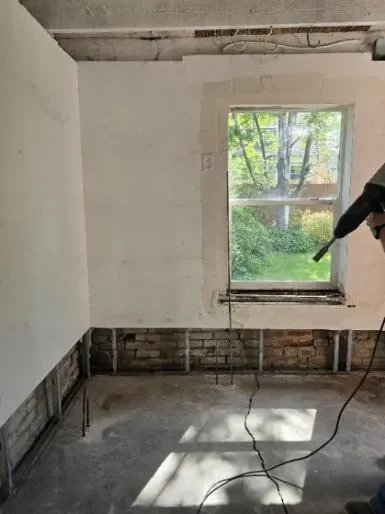
Not Kansas City, but the closest match to your house. Significant settlement traced to weak soil 10 feet below grade. Injection points went in 4 feet apart, at two depths each, with no digging around the house.
Your house starts the same way those jobs did: soil testing first, at a free on-site assessment.
Nobody can give you an honest number before the soil under your house is tested. Over the phone, any figure is a guess.
What we can give you straight is the comparison. Deep soil injection typically runs 40–70% less than a traditional pier system, mostly because there is no excavation and no heavy steel. Nothing around your house gets dug up, and nothing heavy gets hauled in.
The free on-site assessment tests your soil and gives you your actual figure before any work starts.
Relative cost
40–70% typical saving vs traditional piers
Traditional pier system Excavation and heavy steel
Deep soil injection Your figure lands in the band
Two things set where your house lands
Deeper weak soil means longer probes and more polymer at each point.
One settling corner or a whole wall. More area, more injection points.
Piers are a real fix, and plenty of houses around here stand on them. The question is which one suits what is happening under yours.
Go around the clay
Fix the clay
How it works
Piers: Steel piers carry the weight of your house down past the active clay to deeper, stable ground.
Injection: Polymer injected through small probes fills voids, compacts the weak clay and lifts the footing back toward level.
Your yard
Piers: Excavation along the footing to set each pier.
Injection: No excavation. Small probe holes, patched at the end.
The weak clay
Piers: Left in place. The house stops relying on it.
Injection: Treated. The soil under your footing becomes the support.
Time on site
Piers: Longer: dig, set, backfill.
Injection: Most homes finish in a single day.
Cost
Piers: The higher of the two.
Injection: Typically 40–70% less than piers.
Both stop the movement. Injection fits when the trouble is weak or hollowed-out soil under the footing. Testing that soil tells you which you have.
Some houses need something we don't do. If yours is one, the assessment says so.
Needs Structural wall repair
Bracing or anchors to hold the wall. Treating the soil behind it will not straighten it.
Needs Replacement
When the concrete itself has broken apart, nothing under it can save it.
Needs Sealing
Concrete shrinks as it cures. Seal it, watch it, and keep your money.
Everything we do under a house, from soil to slab: residential foundation repair and concrete lifting.
Whoever you call, ask these five before you agree to anything. Good answers protect your house either way. Ours sit beside each one.
Listen for A price with no test behind it is a guess about what is under your house.
Stratalock: Yes. Dynamic cone penetrometer (DCP) testing comes first. The plan and the quote follow what it finds.
Listen for Sealing a crack covers the symptom. The clay that moved stays where it was.
Stratalock: The cause. Polymer goes into the weak clay under your footing, fills the voids and firms it up.
Listen for Ask where any excavation goes and who puts the yard back.
Stratalock: No excavation. Small probe holes, patched before the crew leaves.
Listen for Ask for days on site, not only a start date.
Stratalock: Usually one day. Most residential projects finish in a single day.
Listen for Ask to see both in writing before work starts.
Stratalock: Yes. Licensed and insured contractors.
Behind that, 40+ years of combined experience.
We work across the greater Kansas City area, in Missouri and in Kansas. Completed work here includes an office floor in Overland Park, KS and a pool in Kansas City, MO.
Stratalock also works in Chicago, Denver and Phoenix, bringing the same soil-first method to their clay, as with our foundation repair in Chicago.
The things worth settling before anyone looks at your house. If yours is not here, call and ask it.
Nobody can honestly price foundation repair, Kansas City, MO or anywhere else, before testing the soil. How deep the weak soil goes and how much area needs treating set the figure. Deep soil injection typically runs 40–70% less than traditional pier systems: no excavation, no heavy steel. Where the saving comes from.
No. A hairline crack in a poured basement wall, or thin cracks across the floor, are usually concrete curing. Seal them and watch; you don’t need us. Stair-step cracks, a horizontal crack, sticking doors and sloping floors trace back to the soil. Here is how to tell a stable hairline crack from a progressive one.
Usually one day. Most residential projects are completed in a single day, with the lift watched in real time.
Both, in one step. Polymer injected at the weak depths fills voids and compacts loose soil, and as it expands it lifts the foundation back toward level. See the full process.
That is why the soil gets treated. The clay swells when wet and shrinks when dry, moving the house a little unevenly each year. The polymer firms the soil under your footing and will not shrink, degrade or wash away.
Usually. In basement foundation repair, Kansas City clay is the first suspect: wet springs push it against the wall, dry late summers shrink it away from the footing. Stabilizing that soil fixes a crack or early lean. A wall already bowed far inward needs structural wall repair, and we will say so.
No. No excavation, no trench. The work goes through small injection probes, and the holes are patched.
Yes, either side. We work across the greater Kansas City area, in Kansas and Missouri. Every job starts with a free estimate and a soil test.
One visit, with the soil under your footing tested, tells you whether it is the concrete or the soil. If it is nothing, you hear that too.
Sunken driveway or patio instead? That is residential concrete lifting.
Seal it and watch it. You don't need us.
A plan for your house: where it is weak, how deep, and what the fix costs.
The clay keeps cycling, wet spring to dry August, every year. A crack that is moving keeps moving.